
Why Kegels Aren't Always the Answer (But They're Not the Enemy Either)
Written by Dr. Lizzie Kieffer, DPT.
As it goes for all trends in every category, you will witness the pendulum swing from one extreme to the other as time goes on. And in pelvic health, that definitely holds true when it comes to talking about kegels. Originally, it was “trendy” for all pelvic floor issues to be given the prescription of “just do kegels” to try to fix the problem.
→ "Leaking? Do kegels."
→"Pregnant? Do kegels."
→"Postpartum? Do kegels."
It felt like women were just constantly being told to do kegels to fix every single problem, and then when that didn’t work, many were left feeling like there was no other solution since they already tried "doing kegels” as prescribed. However, as time has gone on and pelvic health has been given more attention and research, we are starting to see the pendulum swing the other direction.
You might even be seeing the messaging shifting to “NEVER do kegels!” or “Kegels will make it worse!” or just in general “Kegels are bad.”
And I can imagine for those who may be in need of pelvic health or are experiencing some sort of pelvic dysfunction for this pendulum swing about kegels to be somewhat confusing and maybe even leave you feeling like it’s better to do NOTHING than to do something that could be harmful, right?
So, let’s dive into this whole kegels topic. Should we be doing them? Should we be avoiding them like the plague? If we’re supposed to do them, how do we know if we are supposed to? And if we’re not, how do we know that??
As it goes with most things, the truth lies somewhere in the middle. In this blog, let's talk about what a kegel actually is, when it can help, when it may not be the best answer, and what truly creates long-term pelvic floor strength!
what is a kegel?
Before we can talk about whether kegels are helpful, let's make sure we're all talking about the same thing here. A kegel is simply a contraction of your pelvic floor muscles. Because remember, your pelvic floor is simply a group of muscles that sits at the bottom of your pelvis, acting almost like a hammock that supports your pelvic organs, including your:
Bladder
Bowel
Uterus (or other reproductive organs)
But these muscles really do much more than most people realize! They play an important role in:
Bladder and bowel control
Supporting your pelvic organs
Core stability
Pressure management
Sexual function
Pregnancy, birth, and postpartum recovery
When someone tells you to "do a kegel", they're referring to the act of lifting and squeezing those pelvic floor muscles. One way to think about it is that a kegel is simply an exercise for one specific muscle group, just like a bicep curl is an exercise for your biceps or a squat is an exercise for your glutes and legs.
And that's where things start to get interesting…because while a bicep curl can absolutely help strengthen your biceps, it probably wouldn't be the ONLY exercise you'd rely on to build overall upper body strength, right? This same concept applies to your pelvic floor too! Kegels can be a useful tool, but they are only one piece of the pelvic floor puzzle.
do kegels actually work?
This might be controversial, but my short answer to this popular question is…yes. Because despite what you may hear on social media, pelvic floor muscle training is still considered a first-line treatment for many pelvic floor conditions, particularly stress urinary incontinence (leaking urine with activities like coughing, sneezing, laughing, or exercise).
Research consistently shows that women who correctly perform pelvic floor muscle training often experience improvements in:
Bladder leakage
Pelvic floor strength
Pelvic organ support
Overall quality of life
In fact, a large Cochrane Review by Dumoulin et al. found that women with urinary incontinence were significantly more likely to report improvement when participating in supervised pelvic floor muscle training compared to women who received no treatment.
So, if you've heard someone say that kegels are useless, outdated, or don't work, that's just simply not true, especially because the research supporting pelvic floor muscle training is actually quite strong!
However (and this is where a lot of the confusion comes in), research is also very specific about how pelvic floor muscle training is performed. Most studies showing positive results involve women who have been taught how to properly contract their pelvic floor muscles and often include supervision, progression, and individualized guidance along the way. In other words, the success isn't coming from randomly squeezing your pelvic floor a few times throughout the day and hoping for the best. It's coming from targeted training that is part of a larger plan, and likely supervised or instructed by someone who knows what they’re doing.
And this is where the conversation starts to shift. Because while kegels can absolutely be helpful, they are often treated as the entire solution, when they're really just one foundational piece of it. Because thinking that one single thing is going to fix all pelvic floor dysfunction is just entirely unrealistic.
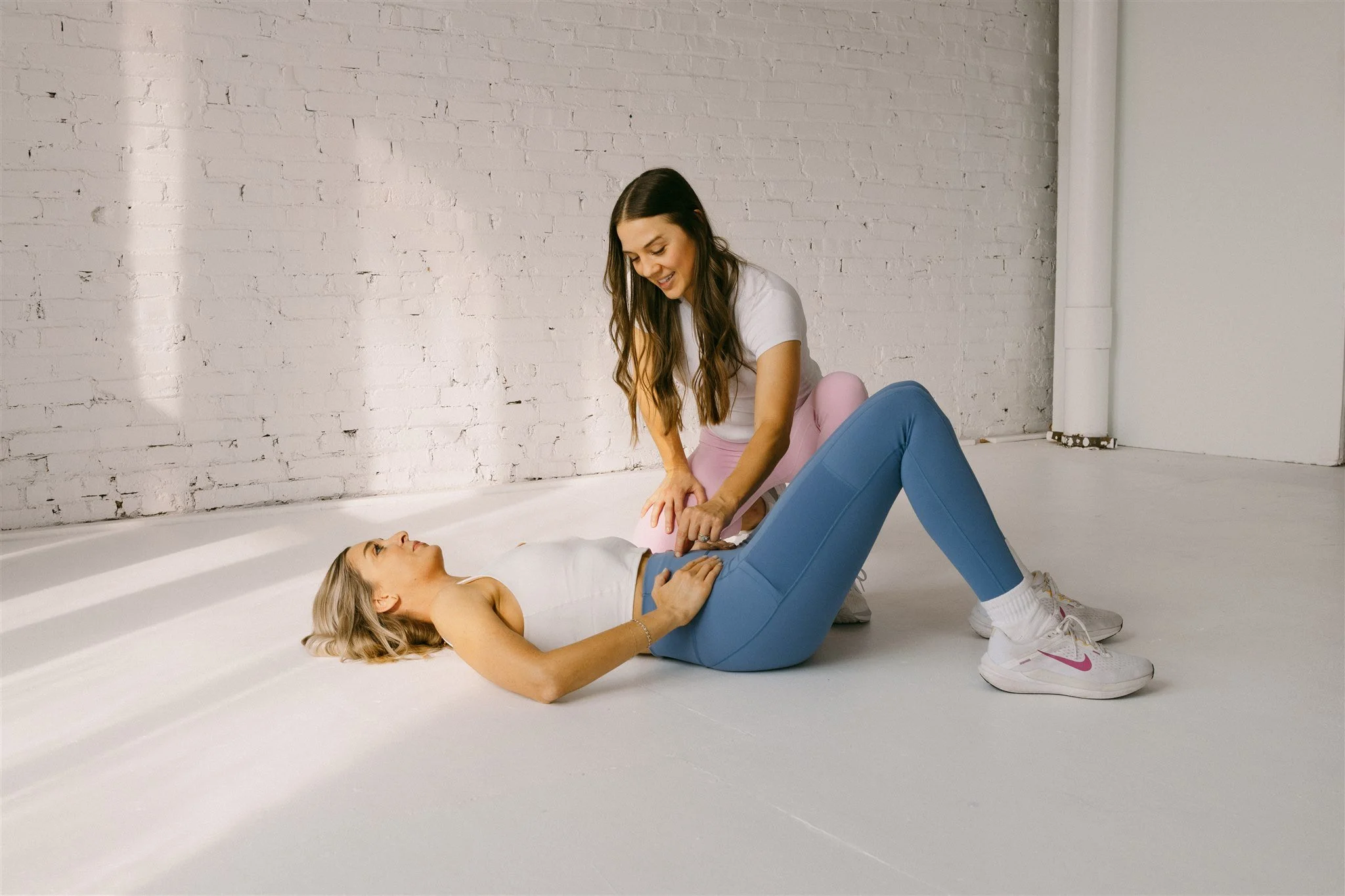
the real problem: kegels are often treated as the entire solution
It was never about whether kegels work or don’t work. It’s that they are too heavily being relied upon to be the entire solution, instead of just one tool to use towards fixing the problem. So many women are going to see their doctor for a pelvic floor issue, and leaving with only being told to “do x amount of kegels”…and that’s it. No back up plan for when that inevitably fails. No further instruction on how to do them properly. And most likely no referral to a pelvic floor physical therapist. Instead, the kegel has become the enemy because they are being prescribed as a one-size-fits-all solution for every single pelvic floor problem out there…and then leading to failure when the problem still remains after doing “x” amount of kegels.
The reality is that most pelvic floor dysfunctions are far more complex than that.
Many women are told to start doing kegels without anyone ever evaluating what is actually happening with their pelvic floor. No one checks whether:
They're performing the contraction correctly
The pelvic floor is truly weak
The muscles are actually too tight or overactive
Coordination is the underlying issue
Breathing patterns are contributing to symptoms
The deep core is functioning well alongside the pelvic floor
And when these things go unchecked or unacknowledged, that's where problems can begin. This would be like going to your doctor because your shoulder hurts and being told to immediately start doing bicep curls without first figuring out what is causing the pain. Doesn’t seem very thorough, or even make sense at all, does it? Yet that's essentially what happens with women experiencing pelvic floor symptoms all the time.
The pelvic floor doesn't work in isolation. It works alongside your diaphragm, deep core, ribs, pelvis, posture, breathing patterns, and movement strategies throughout the day. If one of those pieces isn't functioning well, simply adding more kegels may not address the root cause of the problem, or can even exacerbate the problem!
That's why it's important to understand that while kegels can be a valuable tool, they're just that: a tool. Not the entire toolbox. So let's talk next about some of the most common reasons women continue to struggle with symptoms even when they're faithfully doing their kegels.
5 reasons kegels may not be solving your symptoms
1. You May Not Be Doing Them Correctly
This one is more common than you might think. Research has shown that many women struggle to correctly identify and contract their pelvic floor muscles. In other words, they think they're doing a kegel, but they're actually bearing down, holding their breath, squeezing their glutes, or using other muscles instead.
And this can be so common because the pelvic floor isn't exactly a muscle group we can see in the mirror or easily watch while we're training it! There is a huge mind to muscle connection that has to happen in order to identify the muscles you’re wanting to target, and activate them correctly.
This is also one of the reasons I don't immediately jump into prescribing endless kegels. Instead, I like to progress pelvic floor training in stages.
Awareness
Activation
Coordination
Integration
(Keep reading and I’ll go into these stages more in depth down below!)
Skipping straight to strengthening without building awareness, activation and coordination first is a little like stepping into a softball game without ever having swung a bat before…it can be done (I guess?), but it probably isn’t the best move. You would want to break the steps down and practice your form and technique first, so that you’re ready when the time for the game is there!
2. Your Pelvic Floor May Be Too Tight, Not Too Weak
This is one is a big one…because many women assume that they have a weak pelvic floor if they are experiencing leakage or other similar symptoms, but that’s not always the case. Pelvic floor muscles can also be:
Tight
Overactive
Poorly coordinated
…AND still be weak at the same time.
Think about someone with tight shoulders or a tight neck. We don't typically assume those muscles need more tension. Instead, we often work on restoring mobility, movement, and proper function. The pelvic floor is no different. In order for a muscle to generate optimal strength, it needs to be able to move through its full range of motion first. That means it must be able to both contract and relax.
If a muscle never fully relaxes, it loses access to part of its strength potential. This is why learning how to relax your pelvic floor is just as important as learning how to contract it! Some signs that an overactive pelvic floor may be contributing to symptoms include:
Pelvic pain
Constipation
Difficulty emptying your bladder
Painful intercourse
Persistent feelings of tension or tightness
Urinary incontinence
Urinary frequency
In these situations, doing more kegels will not address the root cause and can sometimes make symptoms worse.
3. You're Ignoring Your Deep Core
Your pelvic floor does not work alone. In fact, it is part of a larger pressure management system (I like to refer to as “the canister”) that includes your:
Diaphragm
Deep core (including the transverse abdominis (TA))
Abdominal wall
Pelvic floor
These muscles are designed to work together. When you inhale, the diaphragm and pelvic floor naturally move downward…they have to when you breathe in because when you breathe in your lungs expand with air which causes your diaphragm to then move down which then shifts all the pressure further down and the pelvic floor is SUPPOSED to respond to that pressure by relaxing and moving downward as well! Do you see how your body is designed to work together to allow air to come in and out??
Now, for the exhale, when you allow air to exit, the lungs passively return to their original size as air exits, the diaphragm comes back up and the pelvic floor, in response to the pressure going back up, then returns to it’s normal state when the muscles are at rest (also known as their neutral state).
This coordination is one of the reasons breathing plays such a big role in pelvic floor health. Breathing naturally causes a healthy pelvic floor to move without you even having to think about it!
However, not all pelvic floors are healthy and/or have had trauma that has caused this natural movement, to no longer be natural. If your deep core and pelvic floor aren't working together efficiently, simply squeezing harder is very unlikely to solve any problems. The good news here, is that coordination can be relearned and taught to become natural again!
4. You're Not Training Your Pelvic Floor Functionally
Your pelvic floor wasn't designed to spend its entire life lying on the couch doing kegels. It was designed to support you during movement and every day activities! Throughout your day, your pelvic floor is supposed to help you:
Squat
Lift
Walk
Run
Carry your child
Exercise
Manage pressure throughout daily activities
This is why I eventually progress pelvic floor training beyond isolated contractions into functional activity…because that’s what it was designed to do! Your pelvic floor needs to know how to respond when you're lifting a heavy grocery bag, picking up your toddler, or performing a challenging strength workout, and maybe at one point it naturally knew how to do that, but after giving birth or even other traumatic events happen where scar tissue has developed, pain has occurred or other, it may not respond to these activities the same way it did before.
And that's where breath, movement, and functional training become so important.
5. You're Missing the Bigger Picture of Strength
When most people think about pelvic floor health, they immediately think about strength. And strength is certainly important, but true pelvic floor function requires much more than that. A healthy pelvic floor needs:
Strength
Coordination
Endurance
Relaxation
Pressure management
If even one of those pieces is missing, symptoms can still occur. This is why kegels alone often don't provide the complete solution women are hoping for. Kegels primarily train one aspect of pelvic floor function: the act of contraction, and that’s it. But pelvic floor health is about much more than just squeezing it as hard as you can!
It's about creating a system that can contract when needed, relax when needed, coordinate with your breathing, and support you through the demands of everyday life.
Want more on this?? Check out my YouTube video below for “Why kegels might not be the answer”.
what exercises are better than kegels?
When someone asks this question, I think what they are actually meaning is “What exercises recruit the pelvic floor more effectively?”…and not necessarily “better”. Because the goal isn’t to find exercises that are better than kegels, the goal is to understand better how the pelvic floor functions in real life and then train it accordingly.
And honestly, “better” is truly in the person doing the exercise anyways. One person could whip through 10 squats doing them quickly, without much thought going into the muscles working, your pelvic floor or breath at all and basically make the exercise be as minimally beneficial to your pelvic floor as possible, OR someone could be doing some deep diaphragmatic breathing, focusing on slow and controlled movements with full relaxation on the breath in, and full contraction on the breath out, feeling your pelvic floor engage and relax throughout - in that case, which is “better”? 10 squats performed quickly, or 5 deep diaphragmatic breaths with pelvic floor contraction and relaxations? So you see, it’s not about what exercise is going to be the magic exercise for you, it’s about your own level of focus and quality of movement with each and every exercise you choose to do!
But all that aside, let’s talk about what research has shown in regards to what exercises may recruit the pelvic floor more effectively…because the answer might actually surprise you!
Research has shown that several functional exercises can produce significant pelvic floor muscle activation, sometimes even greater activation than a traditional isolated kegel exercise.
Some examples include:
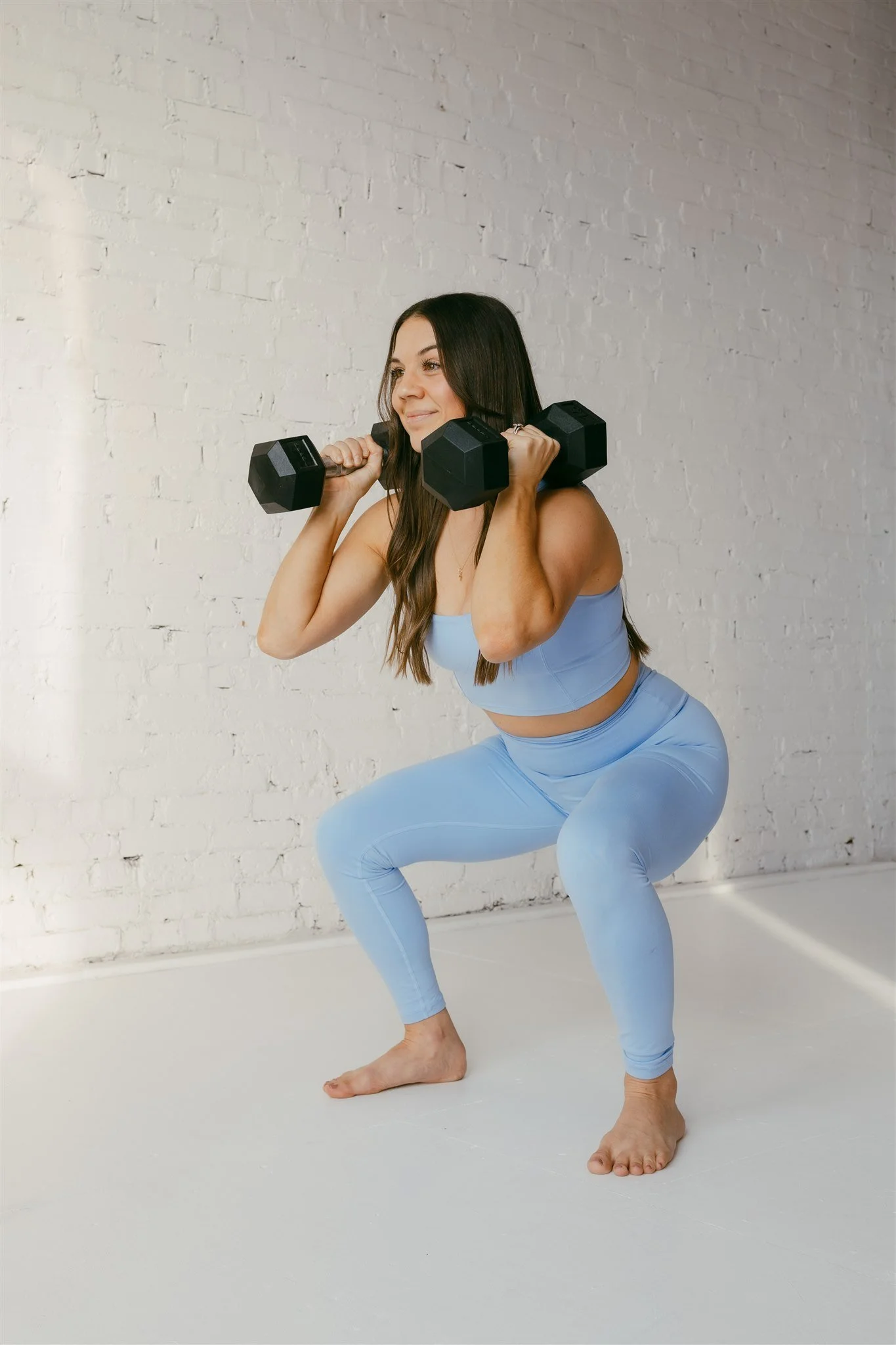
Squats
Bridges
Bear hovers
But why?
→ Because these exercises don't just challenge the pelvic floor. They challenge the entire system. During a squat, bridge, or bear hover, your body must coordinate:
Your breathing
Your deep core
Your pelvic floor
Pressure management
Whole-body movement
This is much closer to how your pelvic floor is designed to function in everyday life.
Think about it this way: your pelvic floor isn't only responsible for squeezing and lifting. It's responsible for responding appropriately while you're moving, lifting, carrying, exercising, and managing pressure throughout the day. That's why I often incorporate functional strength exercises into pelvic floor rehabilitation and training programs, and also why each and every exercise and movement inside Mind Body Core has a voice-over with specific cueing for the movement, your breathing and deep core/pelvic floor coordination and engagement.
Now, to be clear, this doesn't mean kegels are bad or that they should never be used. Kegels can be incredibly valuable for building awareness (like we talked about above), learning how to find the pelvic floor, and improving specific symptoms when prescribed appropriately. But once that foundation is established, many women benefit from progressing beyond isolated contractions and into exercises that teach the pelvic floor how to work alongside the rest of the body.
If you'd like to dive deeper into the research and see specific exercises that have been shown to recruit the pelvic floor effectively, be sure to check out my blog: Strengthening the Pelvic Floor: Exercises Better Than Kegels. There, I break down the research and walk through some of my favorite functional exercises for pelvic floor strength and coordination.
how i progress pelvic floor training
When I work with women on pelvic floor training, the goal isn't simply to perform stronger and stronger kegels.
The goal is to build awareness, coordination, and eventually the ability to use the pelvic floor automatically during everyday activities.
Here's the progression I typically teach:
Step 1: Awareness - Finding Your Pelvic Floor
This is the first step, because how can you engage a muscle you’re not sure is even there? There are a few techniques that can be used to initiate that awareness…like trying to stop the flow of pee while on the toilet or thinking about avoiding passing gas , both of which are just for AWARENESS and finding pelvic floor, not techniques I would use for any other purpose (we don’t want to start bad habits, but it can be helpful for that awareness factor).
Step 2: Activation - engaging your pelvic floor
Once you’ve been able to feel and find your pelvic floor and have that awareness, now can you activate it? Meaning can you contract it/tighten it and then can you relax it and disengage it? This may be more difficult than it sounds…especially for those of you who are constantly engaging it without even being aware that you’re doing it.
Step 3: Coordination With Your Breathing
You’re aware of it, you’ve activated it, now are you able to coordinate that activation with your breathing and deep core? You have to be able to control when you activate it, when you relax it and do both of those in coordination with your breathing and the other deep core muscles surrounding the area. It takes so much mind to muscle focus (and practice!) to be able to do these things when you’re first starting out!
Step 4: Integrate It Into Movement
And lastly, being able to integrate all these things into movement and functional life! Once you’ve gotten your coordination down where it’s not requiring such heavy focus, then you can move on to the integration stage. This means being able to utilize these skills functionally…when you’re moving, exercising, lifting or just doing your daily activities!
This might look like:
Squats
Deadlifts
Bridges
Carrying your child
Getting up from the floor
The goal is to learn how to coordinate the pelvic floor while your body is moving, because that's how you'll actually use it in real life.
Step 5: Match The level of Contraction To The intensity of the Task
This is one of the most overlooked aspects of pelvic floor training. Your pelvic floor isn’t all or nothing…their are levels at which you can engage your pelvic floor (light, moderate, or heavy). Just like when you are lifting weights…you could squat with just your body weight, or hold 20lb dumbbells in each hand, or have a barbell on your back loaded down with weights for a 1 rep max. It’s the same idea with your pelvic floor, and you should be able to choose and control the level that you contract it based on the level of intensity that’s needed based on the task at hand.
The goal isn't to walk around doing maximal kegels all day. The goal is to develop a pelvic floor that can respond appropriately to whatever your body is asking it to do. That's what functional pelvic floor strength actually looks like!
frequently asked kegel questions
1. Should Everyone Do Kegels?
Should everyone know HOW to do a kegel? Yes. But should everyone be practicing kegels on a daily basis? No. The right answer depends on your symptoms, goals, medical history, and how your pelvic floor is functioning. Kegels are not right for everyone, but that doesn’t mean they’re not right for some!
For some women, kegels can be an important part of the solution. For others, the pelvic floor may actually need more relaxation, coordination, or pressure management training before adding strengthening exercises.
This is one of the reasons pelvic floor health can feel so confusing. Two women may have very similar symptoms but need completely different treatment approaches. That's why individualized assessment and guidance can be so valuable.
2. How Many Kegels Should I Do Each Day?
There isn't one universal number. In fact, pelvic floor training isn't simply about accumulating as many kegels as possible throughout the day. Quality matters far more than quantity. A well-coordinated pelvic floor contraction performed correctly is far more valuable than dozens of repetitions performed with poor technique, breath holding, or excessive tension.
It's also important to remember that your pelvic floor should be able to adjust its effort based on the task you're performing.
For example:
Picking up a lightweight object may only require a gentle contraction.
Carrying your toddler may require a moderate contraction.
Performing a heavy squat or challenging strength exercise may require a much stronger contraction.
Remember that the goal isn’t to be doing maximal kegel contractions all day long, it’s to develop a pelvic floor that can appropriately respond to the demands placed on it.
3. Are Kegels Enough to Fix Pelvic Floor Dysfunction?
Usually not. While kegels can absolutely be a helpful tool, most women benefit from a more comprehensive approach that includes:
Breathing mechanics
Deep core function
Pressure management
Strength training
Mobility
Functional movement
Remember, the pelvic floor is part of a larger system. If the diaphragm, deep core, breathing patterns, posture, or movement strategies aren't working well, simply adding more kegels may not fully address the root cause of your symptoms. The most effective treatment plans typically look at the entire picture, not just one muscle group.
the biggest takeaway…
Kegels aren't the enemy. They're also not the magic solution they were once made out to be.
For some women, they're an important starting point. For others, they may not be the missing piece at all. Because the goal isn't to always be strengthening your pelvic floor. That may not be what you need at all! The overall goal is to help your pelvic floor function well and do what it was naturally designed to do. That means learning how to:
→Contract
→ Relax
→ Coordinate with your breath
→ Work alongside your deep core
→ Support you during real-life movement
Because true pelvic floor health is about more than squeezing harder, it's about building a system that works together!
ready for a more complete approach to pelvic health?
If you've spent years being told to "just do your kegels" and you're still dealing with symptoms, because just doing kegels never worked for you…well, those days are over!
Most women do NOT need more random exercises or hundreds of kegels, they just need a legit plan that was designed FOR them. They need guidance, they need someone to show them not only what to do, but how to do it…and that is exactly why I created Mind Body Core.

Inside MBC, every workout, program, and exercise is designed with the pelvic floor, deep core, breathing, and whole-body function in mind.
You'll find:
Step-by-step guidance for core and pelvic floor connection
Voiceover cueing throughout workouts to help coordinate your breathing, core, and pelvic floor
Exercise demonstrations and form videos so you can feel confident you're doing movements correctly
Exercise modifications and swaps when your body needs something different
Structured programs for pregnancy, postpartum, pelvic floor recovery, strength building, mobility, and more
Most importantly, MBC takes the guesswork out of the process. No more wondering whether you should or shouldn’t be doing kegels, or if you’re doing your exercises correctly or wondering what you should do next. Instead, you'll have a clear path forward with programming designed by a pelvic floor physical therapist (me!) who understands the unique needs of women through every stage of life.
Whether you're:
→ Trying to conceive
→ Pregnant
→ Newly postpartum
→ Years beyond childbirth
→ Looking to build strength while supporting your pelvic floor
…MBC was built for you. Because pelvic floor health isn't about finding one magic exercise, it's about building a stronger, more connected body through movement that actually makes sense.
If you're ready to move beyond "just do your kegels" and start following a plan designed to support your entire system, I'd love to welcome you inside the MBC membership.
*Research Referenced: Dumoulin et al., Cochrane Database