
7 Signs Your Pelvic Floor May Be Weak (And What to Do About It)
Written by Dr. Lizzie Kieffer, DPT.
If you've been experiencing some pelvic floor symptoms that have brought you straight to the internet to figure out what the heck is going on, well, I’m glad you landed here! And if those symptoms are things like leaking urine, pelvic pressure, core weakness or discomfort with exercise or activity and you’re starting to wonder whether your pelvic floor is weak, and what to do about it, again, I’m glad you’re here!
Because while many of those symptoms listed above are very common, they are by no means normal and should absolutely be addressed! And I also want to add, that while many of those symptoms listed above CAN be signs of pelvic floor weakness, it doesn’t always mean it’s a direct correlation to weakness and can actually indicate other things or even a combination of things.
And that's a very important distinction to understand right from the get-go. You may be reading this and nodding your head thinking that yes, those are your EXACT symptoms…it still doesn’t necessarily mean that pelvic floor muscle weakness alone is the culprit.
The pelvic floor is part of a larger system that works alongside your diaphragm, deep core muscles, breathing patterns, and the rest of your body. In some cases, symptoms may be related to poor coordination of those muscles, improper pressure management, or even an overly tight pelvic floor rather than simple muscle weakness (because remember that tight does NOT equal strong, and having overly tight pelvic floor muscles can actually lead them to become weak - more on that later).
That's why it's so important not to self-diagnose based on one symptom alone.
Instead, think of these signs as clues that can help you better understand what your body may be trying to tell you and whether it's time to focus on improving your pelvic floor function.
In this blog, we'll cover seven common signs that may indicate pelvic floor weakness, what can contribute to these symptoms, and the most effective ways to build a stronger, more functional pelvic floor. Let’s get into it!
what causes a weak pelvic floor?
Before I start to list out these common pelvic floor muscle weakness signs, let’s take a step back and talk about what even causes a weak pelvic floor in the first place.
Just like any other muscle group in your body, your pelvic floor can change over time based on the demands placed on it. Pregnancy, childbirth, aging, and even daily habits can all influence how well these muscles function. Sometimes the pelvic floor becomes weaker. Other times, it becomes overly tight, poorly coordinated, or struggles to manage pressure effectively.
Some of the most common factors that can contribute to pelvic floor weakness or dysfunction include:
Pregnancy: As your baby grows, the pelvic floor supports increasing amounts of weight and pressure for months at a time as well as postural changes that can affect the positioning of the pelvic floor.
Vaginal Delivery: Stretching (or tearing, in some cases) of the pelvic floor muscles and surrounding tissues during birth can temporarily affect strength, coordination, and support.
C-Section Recovery: While a C-section doesn't directly stretch the pelvic floor the way a vaginal delivery does, pregnancy itself still places significant demands on these muscles. Additionally, abdominal surgery can affect your deep core, breathing mechanics, and overall pressure management…all of which influence pelvic floor function.
Chronic Constipation: Repeated straining during bowel movements places excessive downward pressure on the pelvic floor over time.
Heavy Lifting Without Proper Pressure Management: Whether you're lifting weights, carrying toddlers, or moving furniture, repeatedly holding your breath or creating excessive abdominal pressure can contribute to pelvic floor dysfunction and weakness.
High-Impact Exercise: Activities like running and jumping aren't "bad" for your pelvic floor, but they do place higher demands on these muscles. Without adequate strength and coordination, or again, proper pressure management during said activities, symptoms may begin to appear.
Chronic Coughing: Frequent coughing from allergies, asthma, or illness repeatedly increases pressure through the pelvic floor, which can contribute to symptoms over time.
Aging and Menopause: Natural hormonal changes, particularly declining estrogen levels during menopause, can affect muscle tissue, connective tissue, and pelvic floor support.
The important thing to remember is that none of these factors automatically mean you'll develop pelvic floor weakness or dysfunction. They're simply common contributors.
The good news? The pelvic floor is remarkably adaptable. Just like other muscles in your body, it can respond to thoughtful, progressive training that focuses on breathing, deep core connection, coordination, and strength.
7 signs your pelvic floor may be weak
As we talked about above, these symptoms don't automatically mean your pelvic floor is weak. Many of them can also be influenced by poor pressure management, breathing mechanics, deep core dysfunction, or an overactive (tight) pelvic floor. That's why it's important to look at the whole picture instead of focusing on just one symptom.
With that being said, if you're experiencing one or more of the signs below, your pelvic floor may not be functioning as well as it could, and it's worth taking a closer look!
Let's walk through seven of the most common symptoms I see and what they may be telling you.
1. leaking urine during everyday activities or exercise
One of the most common reasons women start questioning whether they have a weak pelvic floor is bladder leakage…also known as urinary incontinence.

Maybe it happens when you:
Cough
Sneeze
Laugh
Jump
Run
Lift something heavy
Pick up your child
This specific type of leakage is known as stress urinary incontinence, and it's especially common after pregnancy and childbirth.
While pelvic floor weakness can absolutely contribute to bladder leakage, it's important to know that it isn't the only possible cause. Leakage can also be related to poor coordination between your pelvic floor and deep core, breathing mechanics, pressure management, or even an overly tight pelvic floor that isn't functioning efficiently (as mentioned above).
And that is EXACTLY why being told to simply do more kegels (or start doing kegels) isn't always the answer. It’s kind of equivalent to being told to do some bicep curls if your shoulder is having an issue…it’s simply an exercise, not a fix. Just like a kegel is just an exercise and not the cure-all for every pelvic floor issue out there, even if the issue (or part of the issue) IS pelvic floor muscle weakness.
What to do:
Start by learning how to breathe properly, then coordinate your breathing, deep core, and pelvic floor together. From there, progressively strengthening your entire body can help improve pelvic floor support and reduce symptoms over time.
2. you feel heaviness or pressure in your pelvis
Have you ever felt like something was "falling out" or noticed a heavy, dragging sensation in your pelvis by the end of the day or even with certain activities? Some women describe it as feeling like they're sitting on a tampon, while others notice increased pressure after standing for long periods, exercising, or carrying their children.
Pelvic heaviness or pressure can sometimes be a sign that your pelvic floor isn't providing the support it needs. Because your pelvic floor muscles are a layering of muscles that sit almost like a hammock for some of your internal organs to be supported by. And if those muscle layers are weak, you can imagine that the hammock would have more of a sag to it (for lack of a visual image), or even allow the internal organs to drop low into those muscle layers. With that being said, just like bladder leakage, this symptom isn't always caused by weakness alone.
It may also be related to:
Poor pressure management
Poor toileting habits or chronic constipation
Lifting heavy with improper technique for long periods of time
Childbirth (and without a full recovery after)
Poor coordination between the deep core and pelvic floor
…among other things, because several conditions can cause similar symptoms, it's important not to assume weakness is the only explanation (are you tired of me saying this yet??)
What to do:
If you're experiencing persistent heaviness or pressure, especially if it worsens throughout the day or during exercise, it's worth being evaluated by a pelvic floor physical therapist. In the meantime, focusing on breathing mechanics, deep core connection, and gradual strength training can help improve how your body manages pressure and supports your pelvic organs.
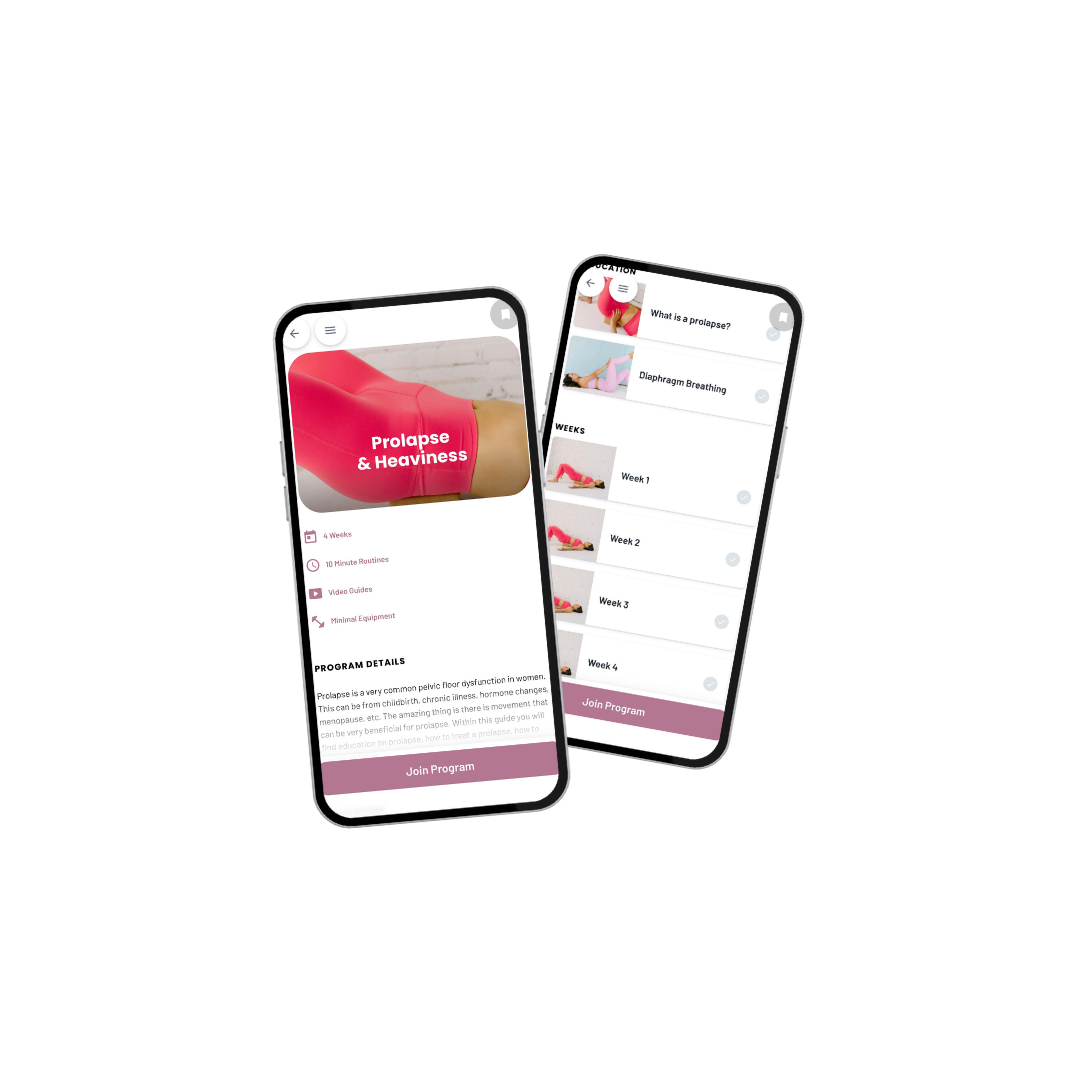
And if you’re looking for more guidance on this particular symptom, and in-person pelvic floor physical therapy isn’t in the cards right now, I have a 4-week program inside Mind Body Core that covers this exact symptom (prolapse/heaviness) and provides education, resources and 4 weeks of step-by-step programming specifically for improving your symptoms!
3. your core always feels weak or unstable
Many women assume that if they can do planks or crunches, their core must be strong, but true core strength goes much deeper than your "six-pack" muscles.
Your deep core works together with your diaphragm and pelvic floor to create stability, manage pressure, and support your spine during everyday activities. When one part of that system isn't functioning well, it's common to feel like your core never quite regains its strength after pregnancy.
You might notice:
Difficulty feeling your deep core engage or only feeling your more external core muscles engage instead
Low back discomfort during workouts or daily activities
A feeling of instability when lifting your child or carrying groceries
Trouble progressing your strength training because your core feels like the limiting factor
And sometimes, even feeling like your balance is off (your core is a major stabilizer!)
While pelvic floor weakness can contribute to these feelings, so can poor coordination between your deep core, breathing, and pelvic floor. That's why rebuilding your core isn't just about doing more ab exercises…it's about teaching your entire system to work together again!
What to do:
Start by focusing on diaphragmatic breathing and deep core connection before progressing into functional strength training. As your core and pelvic floor begin coordinating more effectively, you'll build that stable foundation needed for everything from everyday movement to more advanced workouts.
If you've ever wondered why your lower belly still doesn't feel or look the way you expected postpartum, be sure to read my blog on the truth about losing postpartum belly fat. It explains how deep core function, pressure management, and body composition all work together.
4. you have difficulty controlling gas or bowel movements
When most people think about the pelvic floor, they immediately think about bladder control. And that’s probably because that feels a little more comfortable to talk about than the back side of the pelvic floor; however, let’s normalize talking about these uncomfortable things!
Because your pelvic floor ALSO plays an important role in bowel function…remember that the anterior portion of the pelvic floor is for urinary function and the vaginal opening, where the posterior portion is for bowel function. Yep, it’s ALL the pelvic floor!
These particular muscles help support fecal continence by coordinating with the muscles around your rectum and anus. When they're not functioning optimally, you may notice symptoms like:
Difficulty controlling gas
Bowel urgency
Leakage of stool
Feeling like you can't completely control bowel movements
Just like the other symptoms we've discussed, these issues aren't always caused by weakness alone. Tightness, poor coordination, constipation, or other pelvic floor dysfunctions can also contribute.
That's why it's important to look at how your pelvic floor is functioning as a whole rather than assuming it simply needs to be strengthened, but weakness can also be a contributing factor that shouldn’t be ignored either!
What to do:
If you're experiencing changes in bowel control, don't ignore them or assume they're "just part of having babies". Learning how to coordinate your breathing, deep core, and pelvic floor, while also addressing factors like constipation and pressure management, can make a significant difference. If symptoms are persistent, working with a pelvic floor physical therapist can help identify the root cause and create a treatment plan that's right for you.
5. you experience pain or discomfort during intimacy
I want to be really clear with this particular sign, because the correlation between this symptom and pelvic floor weakness isn’t direct. Why would a weak pelvic floor include pain or discomfort with intimacy?
Well, remember when I talked about an overactive or “tight” pelvic floor doesn’t mean strong and we would talk about it later? It’s later!
Let’s start by saying that some discomfort can definitely occur during the healing process after having a baby (or other injury/trauma), but ongoing pain is not something you simply live with for however long.
And oftentimes, after injury or trauma, your pelvic floor muscles can heal overly tight (like how a scar might heal if left alone) or can even heal with some increased muscle tension. When those muscles heal that way, and are then left alone to remain in that overly tight/tense position without regaining full range of motion, the muscles will naturally start to atrophy…just like any other muscle. Imagine if you left your arm in a bicep curl position for 6 months. Even if you were squeezing your bicep staying in that position, it would still be very weak because you hadn’t been moving it and using it within it’s full range of motion (full extension to full flexion…or elbow fully straightened to then fully bent).
It’s the same with your pelvic floor. If it’s left in an overly tightened position without being able to move through it’s full natural range of motion, it’s going to get weaker and weaker until range of motion is restored and then strengthened through the full range.
To sum this up, while the pain and discomfort you may feel during intimacy is more directly related to the pelvic floor being overly tight/tense, this symptom can be a good indication that it’s ALSO weak (or is going to be). Meaning that this sign should not be ignored…for MANY reasons!
What to do:
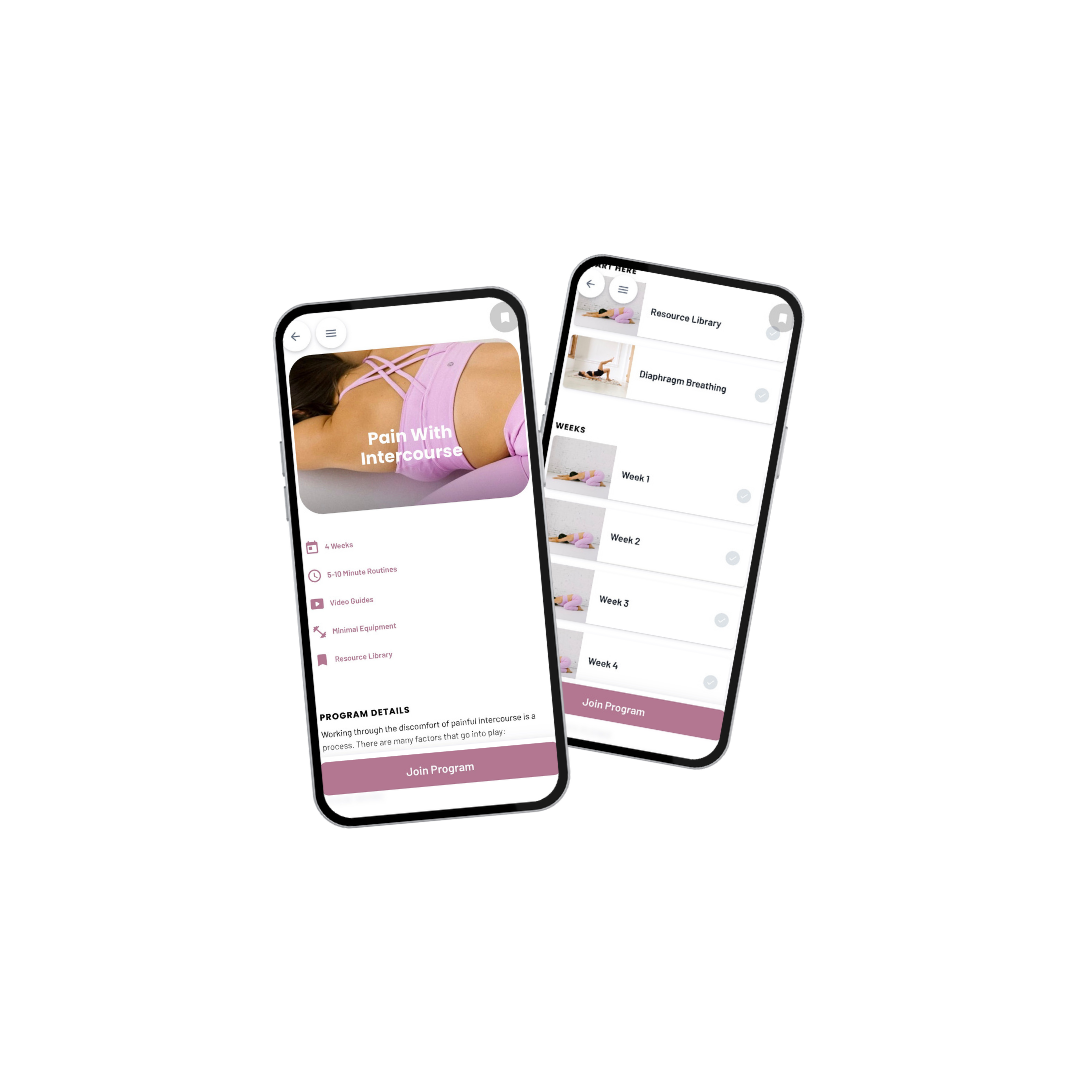
If you're experiencing persistent pain or discomfort during intimacy, don't ignore it or assume it's something you have to live with. A pelvic floor physical therapist can help determine what's contributing to your symptoms and guide you through a personalized treatment plan. Depending on the underlying cause, that may include breathing exercises, mobility work, scar tissue techniques, relaxation strategies, strengthening, or a combination of approaches. And again, if you’re looking for guidance NOW, Mind Body Core has a 4-week Pain with Intercourse program that provides education, resources and specific programming to help you start to move in the right direction!
6. you notice coning or doming during exercise
Have you ever looked down during a workout and noticed your abdomen forming a ridge or "bread loaf" shape through the middle? This is commonly referred to as coning and doming. And it actually doesn’t even have to be when exercising…it might happen when you go to sit up out of bed or get up off the floor.
And while coning and doming look slightly different, both are signs that your core may not be managing pressure as efficiently as it could during movement.
Again, it's important to remember that coning or doming doesn't automatically mean your pelvic floor is weak, but instead, it often points to poor coordination between your breathing, deep core, abdominal wall, and pelvic floor. In other words, your body may be struggling to distribute pressure effectively during an exercise, but it also could be your body’s way of compensating for a weak pelvic floor.
This is especially common during pregnancy, postpartum, or when returning to exercise after a period of inactivity. It can also be common if you’ve recently lost a significant amount of weight, but your core strength didn’t keep up with the weight loss.
What to do:
Rather than avoiding exercise altogether, focus on improving your breathing, deep core connection, and pressure management…and also, learning how to properly engage your DEEP core is a major foundational tool as well. But, even with that, sometimes simply modifying an exercise or reducing the intensity allows your body to build better movement patterns before progressing again.
7. you avoid certain activities because they don't feel good
Sometimes the biggest sign that something isn't functioning optimally isn't a specific symptom, it's the things you've stopped doing because you're worried about what might happen.
Maybe you've stopped:
Running because you're afraid you'll leak.
Jumping with your kids because it feels uncomfortable.
Lifting heavier weights because your core doesn't feel stable or you feel pressure and heaviness when you do.
Exercising altogether because you don't know what's "safe".
Maybe you’re not doing the things that cause symptoms because you’ve already learned your lesson, or it’s happened a handful of times and you don’t want it to keep happening, so you just stopped doing the activity as a way of prevention.
While pelvic floor weakness can certainly contribute to these concerns, fear of movement often develops because women haven't been taught why they're experiencing symptoms or how to safely rebuild strength.
But the good news with that is that avoiding movement isn't usually the answer, and it definitely isn’t what fixes the root of the problem. With the right guidance, many women can gradually return to the activities they love by improving their breathing mechanics, deep core connection, pelvic floor coordination, and overall strength. And yes, improve their pelvic floor strength if weakness is a contributing factor!
What to do:
Instead of avoiding movement altogether, focus on building confidence through progressive, well-designed exercise. Start where your body is today, master the fundamentals, and gradually increase the challenge as your strength and coordination improve.
Remember, the goal isn't to "push through" symptoms, but it's also not to let them define what you're capable of doing. Your pelvic floor is adaptable, and with consistency and the right approach, many women are able to get back to the activities they thought they had to give up.
how to strengthen a weak pelvic floor
Now that we’ve mapped out many of the common signs out, let’s talk about how we can actually strengthen the pelvic floor!
Just like any other muscle group in your body, it can become stronger, more coordinated, and more resilient over time. The key is following a progression that trains your pelvic floor the way it's actually designed to function.
1. Start by Learning to Connect to Your Pelvic Floor
Before worrying about strengthening your pelvic floor, you first need to know how to find and connect to it!
This often starts with learning diaphragmatic breathing and becoming aware of how the pelvic floor naturally moves with each breath. Building this awareness creates the foundation for everything that comes next.
2. Coordinate Your Pelvic Floor With Your Breath and Deep Core
Your pelvic floor doesn't work by itself. It works alongside your diaphragm and deep core muscles to help manage pressure and stabilize your body during movement.
Instead of thinking about squeezing your pelvic floor as hard as possible, focus on learning how these muscles work together. This coordination is often what helps women begin noticing meaningful improvements.
3. Progress Into Functional Strength Training
Once you've built a solid foundation, it's time to teach your pelvic floor how to support you during real life. That means incorporating functional movements like:
Bridges
Squats
Deadlifts
Carries
Step-ups
These exercises don't just strengthen the pelvic floor, they teach it to coordinate with your entire body while managing pressure effectively through everyday movement.
4. Keep Building Your Total-Body Strength
Pelvic floor health isn't separate from the rest of your fitness. When performed with proper breathing and pressure management, strength training can improve:
Pelvic floor function
Core stability
Overall strength
Confidence during everyday activities
Long-term resilience
The goal isn't simply to eliminate symptoms. It's to build a body that feels strong, capable, and supported.
5. Stay Consistent
Perhaps the most important piece of all is consistency…and please don’t misunderstand consistency with perfection, because that is definitely not what is needed for actual change to occur.
And you don't need to perform hundreds of kegels every day or spend hours exercising. Small, intentional efforts performed consistently over time will always outperform occasional bursts of intense exercise.
Remember, pelvic floor rehabilitation is a process, not a quick fix. As your breathing, coordination, deep core, and strength improve, your pelvic floor has the opportunity to improve right alongside them!
frequently asked questions
Can a Weak Pelvic Floor Heal on Its Own?
Some pelvic floor symptoms improve naturally over time, especially during the postpartum period as your body heals. However, that doesn't necessarily mean your pelvic floor has fully regained its strength, coordination, or function.
Targeted pelvic floor and deep core training can help improve symptoms, rebuild strength, and support better long-term outcomes than simply waiting and hoping things resolve on their own.
What Is the Fastest Way to Strengthen Your Pelvic Floor?
There isn't a shortcut when it comes to pelvic floor health.
The most effective approach is one you can do consistently (not perfectly or intensely, just consistently). Rather than focusing on doing more exercises or squeezing harder, focus on building a strong foundation through breathing, deep core coordination, progressive strength training, and functional movement.

Are Kegels Enough to Strengthen the Pelvic Floor?
Not always. Kegels can be a helpful tool, especially for improving awareness and learning how to contract the pelvic floor. But they aren't the entire solution.
Research and clinical experience continue to show that pelvic floor function depends on much more than muscle strength alone. Your diaphragm, deep core, breathing mechanics, posture, pressure management, and movement patterns all work together to support a healthy pelvic floor.
That's why the most effective rehabilitation programs go beyond kegels and focus on improving how your entire system works together.
(Want to learn more? Check out my blog: Why Kegels Aren't Always the Answer (But They're Not the Enemy Either).)
Can Strength Training Improve Pelvic Floor Weakness?
Yes! When performed with proper breathing, deep core activation, and pressure management, strength training can help improve pelvic floor function while also building total-body strength and resilience.
The key is progressing appropriately and learning how to coordinate your pelvic floor with movement rather than treating it as a completely separate muscle group.
This is one of the reasons I incorporate progressive strength training throughout all of the programs inside MBC. It allows you to build strength in a way that supports both your pelvic floor and your everyday life.
improvement is possible
If you’ve been nodding along to this blog post and feeling like it’s speaking to you and what you’re going through, know that improvement is absolutely possible with the right plan and guidance!
The first step is understanding that your pelvic floor is part of a much larger system. It works alongside your diaphragm, deep core muscles, and the rest of your body to support movement, manage pressure, and help you feel strong during everyday life. Which means that even if your pelvic floor truly is weak, it’s likely not the only thing going on. Very rarely is the issue truly JUST weakness, which is why effective pelvic floor training goes beyond just doing your kegels.
Instead, effective pelvic floor training includes:
Breathing and pressure management
Deep core connection
Functional movement
Progressive strength training
Consistency over time
Remember, symptoms like leaking, heaviness, coning, or feeling unstable don't define you, and they don't mean you have to stop doing the things you love either! With the right guidance and a progressive approach, your pelvic floor can become stronger, more coordinated, and better equipped to support you through every stage of life.
ready to strengthen your pelvic floor with confidence?
If you're tired of guessing which exercises to do, wondering if you’re “doing it right” or even debating if weakness is the real issue…you’re in the right place!
Mind Body Core takes the guesswork out of it and hands you unlimited access to education, resources, specific programming and so much more when you join as an MBC member!

Inside MBC, you'll find step-by-step programming designed to help you build strength from the inside out. Every workout is guided by a pelvic floor physical therapist and includes voiceover cueing for your breathing, deep core, and pelvic floor, so you're never left guessing how to move or when to engage your core.
With a monthly or annual membership, you'll unlock access to:
Weekly Workouts with new programming every week
Prenatal and Postpartum Programs
Beginner, Intermediate, and Advanced Core Programs
Mobility, Cardio, and Nutrition Programs
Specialized resources for diastasis recti, prolapse, rib flare, C-section recovery, perineal tears, painful intercourse, and more
Form tutorials, exercise modifications, and educational resources to help you move with confidence
No matter where you are in your journey (trying to conceive, pregnant, newly postpartum, or years beyond childbirth), MBC provides a clear roadmap so you always know what to do next. Because building a strong pelvic floor isn't about finding one magic exercise, it's about following a program that teaches your entire body to work together again!
I'd love to help you get there.