

A Comprehensive Guide to Diastasis Recti
If you have ever looked down at your belly in the months after having a baby and wondered why it still looks like you are a few months pregnant, you are in the right place. That soft, doming middle (often called the “mommy pooch”) is often the most visible sign of something called diastasis recti, and it is one of the most common things I help moms work through.
Here is the good news: you are not broken, your body is not ruined, and this is not something you just have to live with. Diastasis recti is incredibly common, it is highly treatable, and you can absolutely heal it with the right approach. This guide walks you through everything you need to know, from what it is and how to check for it, to the exercises that help, to how to safely close the gap and feel strong and confident in your body again.
I am Dr. Lizzie Kieffer, a Doctor of Physical Therapy, and I built this guide to take the guesswork out of healing your core and pelvic floor. Let us dive in.
What is diastasis recti?
Diastasis recti (often called DR for short) is the separation of the two sides of your rectus abdominis muscle, the one we casually refer to as the "six-pack" muscle. It happens most often during pregnancy, because as your baby grows, your body grows and stretches to make room. Your abdominal muscles are designed to do this, so some separation is a completely normal part of carrying a baby.
The distance between those two sides is called the inter-recti distance (or IRD), and that measurement is how we determine whether you have an actual diastasis recti or just the normal separation that comes with pregnancy. To be considered a true DR, the separation typically needs to be around 2 cm or more, with newer research suggesting it may need to be closer to 3.5 cm. But here is something that matters just as much as the width, and that is the depth of the separation and how the tissue feels when you press into it.
A DR can happen below the belly button, right at the belly button, above the belly button, or along the entire length of the rectus abdominis (which we call an "open diastasis"). The location does not necessarily change how we treat it, but it does help explain why two moms can have very different-looking bellies and still both be dealing with DR.
Beyond the way it looks, the bigger reason to care about diastasis recti is how it affects how your core functions. Your rectus abdominis is part of your deep core system, and when it is not doing its job, the other parts of your core (including your pelvic floor) have to work overtime to compensate. That is how a DR can lead to back pain, pelvic floor dysfunction, leaks, and that overall feeling of weakness and instability. And no, it does not just go away on its own, which is why learning to connect to your core and take action matters so much.
How to Check Yourself for Diastasis Recti at Home
You can absolutely check yourself for diastasis recti at home, and it is a great first step in understanding what is going on with your core. You do not need any fancy equipment, just your hands, a comfortable spot to lie down, and a few minutes.
Here is how to do it:
Lie on your back with your knees bent and your feet flat on the floor.
Place one hand behind your head for support.
With your other hand, bring your fingertips together and turn the pads of your fingers toward your face.
Start just above your belly button and gently press down into your midline.
Lift your head and shoulders slightly, like you are beginning a very gentle crunch. You do not need to come all the way up.
Feel for the edges of your abdominal muscles on either side of your fingers.
Move your fingers up and down the midline, checking above, at, and below your belly button.
You are checking for two things: the width of the gap (how many fingers fit between the two sides of the muscle) and the depth and feel of the tissue (whether it feels firm and supportive or soft and squishy when you press into it). A separation of one to two fingers can be normal after pregnancy. If you can fit three or more fingers in the gap, or if the tissue feels very soft and gives way easily when you press, that can be a sign that you may have diastasis recti and would benefit from some guidance.
Exercises to Avoid with Diastasis Recti
This is one of the most important sections on this page, because doing the wrong exercises can actually make a diastasis recti worse instead of better. When your core is already struggling to manage pressure, the goal is to avoid movements that push that pressure outward into the weak line of tissue down the middle of your abdomen.
Here are the exercises and movements to steer clear of while you are healing:
Traditional crunches and sit-ups. These create exactly the kind of downward, outward pressure that can increase doming and strain across the midline when your core is not ready.
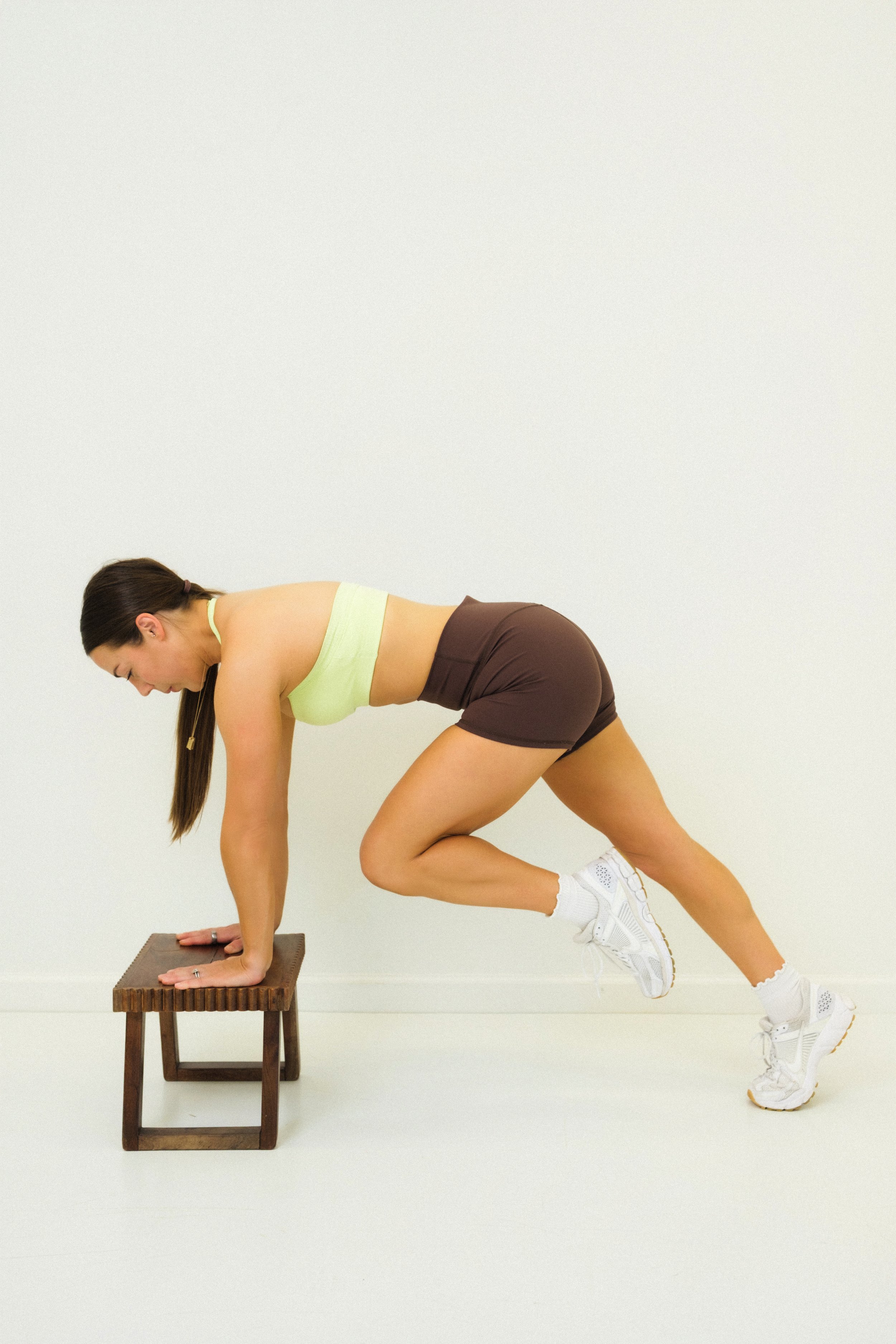
Full planks and full push-ups (until you have built the strength for them). If your belly doming or cones when you try these, your core is not ready yet.
Heavy twisting or rotation. Think Russian twists or bicycle crunches. These load the midline in a way that an unhealed core is not ready for.
Heavy overhead lifting without core engagement. Anytime you are lifting something heavy, you want to brace properly. If you are just powering through without connecting to your deep core, you are putting pressure right into that gap.
Exercises that cause doming or coning of the belly. This is your biggest cue. If the middle of your belly pops up into a little dome or ridge during an exercise, that movement is too much for your core right now, and you should modify or back off.
How to Safely Close the Gap
Here is the part everyone wants to know: how do you actually heal it? The honest answer is that closing the gap is less about crunching your abs back together and more about retraining the way your entire core system works. It is not about doing a bunch of random core exercises. It is about teaching your body to pressurize properly, engage the right muscles, and move in a way that supports your healing.
Healing a diastasis recti comes down to a few key pieces:
Breathing is the foundation. Everything starts with the breath. Learning diaphragmatic breathing, managing your pressure system, accessing your pelvic floor's full range of motion, and coordinating your breath with your pelvic floor is the foundation for healing your DR. When you exhale and draw your deep core in, you are gently bringing those two sides of the muscle back toward the midline and retraining the tissue.
Connecting to the deep core and pelvic floor. Your transverse abdominis (the deepest core muscle that wraps around your middle like a corset) and your pelvic floor are the muscles that help restore tension, support, and control across the midline. Learning to engage them properly, and coordinate them with your breath, is what rebuilds the strength of the linea alba.
Full-body mobility and functional movement. Once you have the foundation, the next step is learning to use your core and pelvic floor during real life, like picking up your baby, carrying the car seat, and moving through your day. Because what is the point of learning to engage your core on the floor if you are not also using it the other 23 hours?
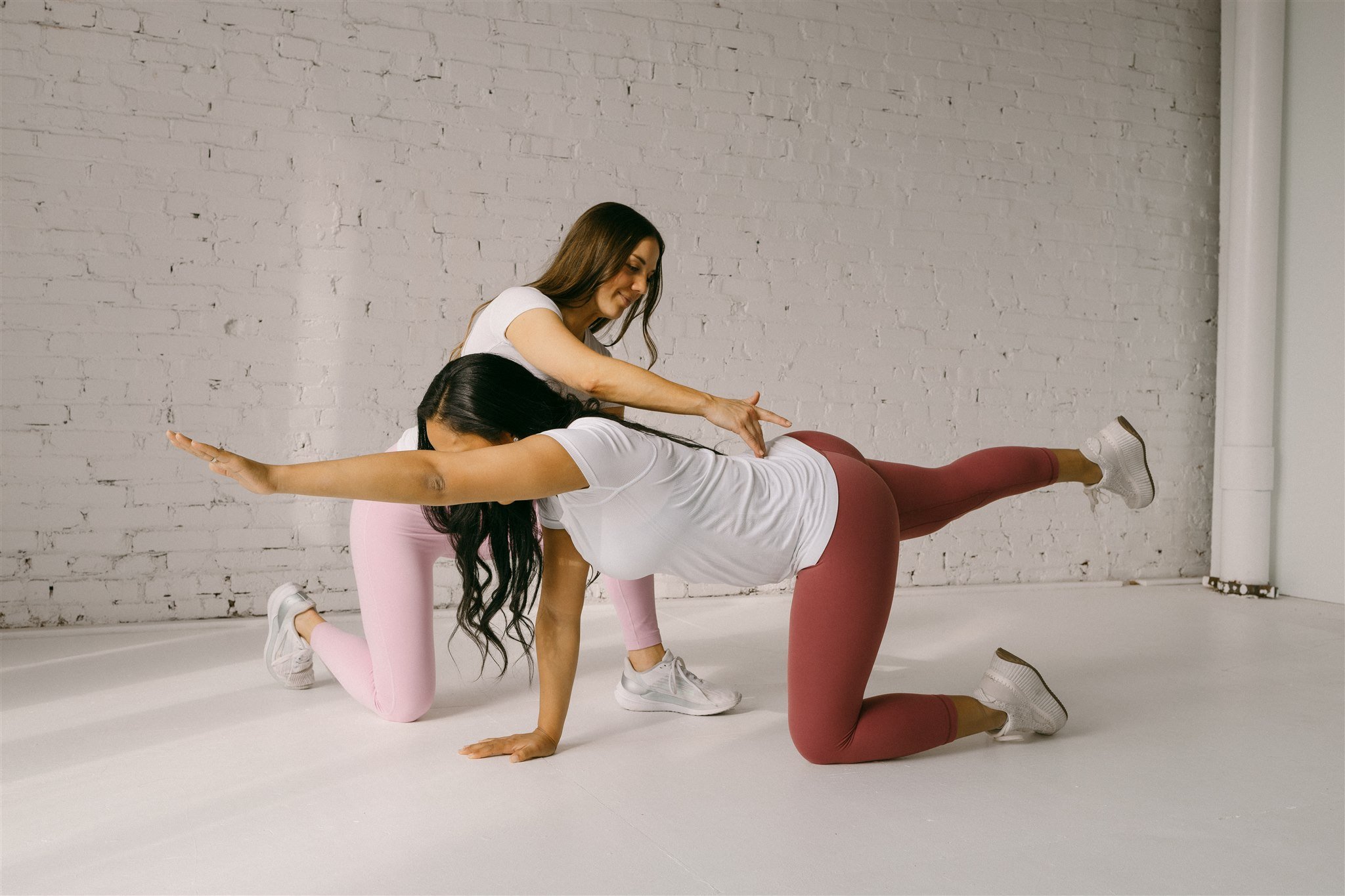
Progressive loading. Sometimes we need more load to heal. As your core gets stronger, you progress to exercises like bird dog, modified planks, marches, bridging, and seated pillow squeezes. These build real strength and teach your body to handle pressure again.
Give yourself grace with the timeline. Healing a DR is not an overnight fix, but it is absolutely possible, and even 20 minutes during a nap is impactful. If you find yourself not making progress or struggling to get the hang of it, that is a sign to get some guidance rather than push harder on your own.
Does Diastasis Recti Go Away on Its Own?
This is one of the most common questions I get, and I want to give you the honest answer. Diastasis recti does not typically just go away on its own. For many postpartum women, DR is not something that spontaneously resolves, and in fact, it can last for years postpartum if it is left untreated.
You have probably heard people say, "Just give it time." While your body does need time to heal after birth, time alone is not a treatment plan for a diastasis recti. For many moms, it does not fully resolve with time alone. The reason is that the gap does not close just because the calendar moves forward. It closes when you retrain the muscles and the connective tissue to work the way they are supposed to. Without that connection and retraining, the tissue stays stretched and the core stays under-supported.
That said, this is not meant to scare you at all. It is meant to inspire you to take action. The encouraging news is that even if it has been months or years since you had your baby, it is not too late. I have worked with so many moms who thought they were stuck with their DR forever, only to see real change once they started connecting to their core properly. Your body is capable of healing, and it is never too late to start.
Diastasis Recti and Back Pain Connection
If you have been dealing with nagging low back pain since having a baby, your diastasis recti could be a big piece of the puzzle. The two are connected in a way that surprises a lot of moms.
Your rectus abdominis is part of your core, and your core and pelvic floor work together to create the intra-abdominal pressure that stabilizes and protects your body. When you have a diastasis recti, that pressure system is compromised. Pressure escapes or pushes through where it should not, and the other parts of your core and your back have to work overtime to make up for that lost stability. Over time, those compensating areas get tired, overworked, and painful. That is how a DR can lead to increased back pain, pelvic floor stiffness or pain, and an overall feeling of weakness and instability.
Your body is like a chain. Everything is connected, so when one area struggles, the other areas try to compensate. That works fine for the short term, but if you never address the original problem, the areas doing all that extra work start to suffer too. This is also why addressing a DR is about so much more than how your belly looks. It is about giving your whole body the support it needs to function pain-free.
The flip side is encouraging: when you heal the core and pelvic floor and restore that pressure system, you are often giving your back the support it has been missing all along. Many moms find that as they heal their DR, their back pain improves right along with it.
Diastasis Recti: Pregnancy vs. Postpartum Differences
Diastasis recti shows up differently depending on whether you are still pregnant or you have already had your baby, and understanding the difference helps you approach healing the right way.
During pregnancy, some separation is completely normal and expected. Your body is supposed to stretch and make room for your growing baby, so the focus during pregnancy is not on closing a gap. It is on learning to connect to your core and pelvic floor, managing your pressure, and using proper bracing so you do not bear down excessively on the pelvic floor or push out on the core, which can exacerbate diastasis recti. Think of pregnancy as the time to build good habits and prepare your body, not the time to try to fix a separation that is doing exactly what it is meant to do.
Postpartum, the goal shifts. Once you have had your baby, the separation that was normal during pregnancy becomes something you can actively work to heal. This is when you focus on reconnecting to the deep core, retraining the pressure system, and progressively loading the muscles to rebuild the strength of the linea alba. The approach is gentler in those early weeks and becomes more progressive as your body heals and gets stronger.
The key difference is this: in pregnancy, you are managing and protecting. Postpartum, you are healing and rebuilding. Both phases matter, and how you care for your core during pregnancy can actually set you up for a smoother postpartum recovery. But no matter where you are in the journey, the foundation is the same: breath, connection, and learning to use your core in everything you do.
Can You Do Crunches with Diastasis Recti?
The short answer is: not right away, and not in the traditional way you are probably picturing. Traditional crunches and sit-ups are one of the top exercises to avoid when you have a diastasis recti, because they create exactly the kind of outward pressure that pushes into the weak midline of your abdomen and can make the gap worse.
Here is why. When you crunch up, you are generating a lot of intra-abdominal pressure. If your deep core is not engaging properly and managing that pressure, it takes the path of least resistance, which in a DR is that stretched connective tissue down the middle. That is why you may notice your belly doming or coning up into a little ridge when you try to sit up out of bed. That doming is your sign that the movement is too much for your core right now.
But here is the part that gives people hope: you can absolutely get back to crunches and more challenging core work eventually. You just have to earn it. First you rebuild the connection to your deep core and pelvic floor through breathing and foundational exercises. Then you progress to movements like bird dog, modified planks, marches, and bridging. As your core gets stronger and you learn to manage pressure without doming, you can slowly work your way back toward more advanced exercises.
Diastasis Recti FAQs
Can I heal a diastasis recti years after having my baby?
Yes. It is never too late to start. I have worked with moms who were years, even many years, postpartum and still saw real improvement once they learned to connect to their core properly. Your body is capable of healing and changing at any stage.
How long does it take to heal a diastasis recti?
There is no single timeline, because every body and every DR is different. Some moms see noticeable changes in a few weeks of consistent work, while others take a few months. What matters most is consistency and making sure you are doing the right exercises the right way. Even 20 minutes a day, like during a nap, adds up.
Is a diastasis recti dangerous?
It is not dangerous in the sense of being life-threatening, but it is a sign that your core is not functioning the way it should. Left unaddressed, it can contribute to back pain, pelvic floor dysfunction, leaks, and that feeling of core weakness. The good news is it is very treatable.
Get Started with Doc Lizzie
If you have Diastasis Recti, get in touch with Doc Lizzie to start treating it today!