
5 Safe Lifting Techniques for Parents to Protect Your Core and Back
Written by Dr. Lizzie Kieffer, DPT.
Babies don’t stay little for long, and toddlers still want to be picked up just as much. For all you parents of older children reading this, I know you know this to be true!
Whether it’s lifting your baby out of the crib, carrying a car seat, or picking up your toddler throughout the day, these movements add up quickly. And if your body isn’t supported properly, they can also lead to things like low back pain, core weakness, or pelvic floor symptoms over time.
But here’s the thing - all of these movements are functional, daily movements that are simply just a part of being a parent that you likely do too many times to even count in a 24 hour period. So, there’s no avoiding these things…and we wouldn’t want to do that anyways! But what we do want to shift the conversation to is how can we do these things differently in order to prioritize joint health, safety and core stability with appropriate pressure management techniques.
In this blog, I’m walking you through 5 simple, safe lifting techniques for parents to help protect your core, support your pelvic floor, and make everyday movement feel easier and more sustainable for current you AND future you!
the goal is awareness
Lifting your baby or toddler or young child is something you do multiple times a day, often without even thinking about it. And while one “off” lift isn’t a big deal, repeating those same movement patterns over and over can start to add up and develop movement patterns that are likely not ideal.
The goal isn’t to be perfect every time. It’s to become more aware of how you’re moving and make small adjustments that better support your body. Those small changes can make a big difference in how your core, pelvic floor, and back feel over time.
Once awareness has been established, then we can move into a few tips to try to improve overall lifting health! Keep reading below for 5 safe lifting techniques to try moving forward!
tip 1: engage your core and exhale as you lift
Before you lift your baby or toddler, take a moment to connect to your breath and core. This helps support your spine, reduce strain, and protect your pelvic floor during the movement.
How to do it:
Inhale and think about expanding your torso 360 degrees (rib cage, abdomen, and back)
As you begin to lift, gently exhale
At the same time, lightly engage your pelvic floor and wrap your deep core in
Think of this as creating a supportive “brace” for your body before and during the lift.
What to focus on:
Keep the engagement gentle (not a hard squeeze or holding your breath)
Match your breath to the movement (exhale as you lift)
Stay connected to your core throughout the lift, not just at the start
And make sure that you aren’t accidentally doing the opposite (bearing DOWN on your pelvic floor)
If you’ve never done this before and a visual would be helpful, make sure to checkout my YouTube video below so I can walk you through what this looks like!
tip 2: hinge at your hips instead of rounding your back
If you’ve already incorporated tip 1, now it’s time to add on the WAY you bend. Instead of rounding through your low back, focus on hinging at your hips and bending your knees to get closer to them.
Your core should already be engaged with tip 1, and now tip 2 helps to target using your legs and glutes more, while keeping your spine in a safer, more supported and braced position.
How to do it:

Stand close to your baby or toddler
Hinge your hips back (picture trying to bump a door shut using your butt) as you bend your knees (like a mini squat)
Keep your chest lifted and your spine neutral (meaning your low back isn’t overly arched one way or the other)
Lift by driving through your legs, not your back
What to focus on:
Avoid rounding through your low back as you reach down
Think “hips back” instead of just bending forward
Move slowly and with control when you can
Avoid breath holding (remember from tip 1 we are exhaling on the lift part)
If this movement feels difficult, tight, or unnatural, it’s often a sign that mobility is something your body needs more of.
tip 3: keep your baby or toddler close to your body
The farther away your child is from your body, the more strain it puts on your core, back, and pelvic floor. Keeping baby close and near your center of gravity helps you stay more stable and makes the lift feel easier and more controlled.
How to do it:
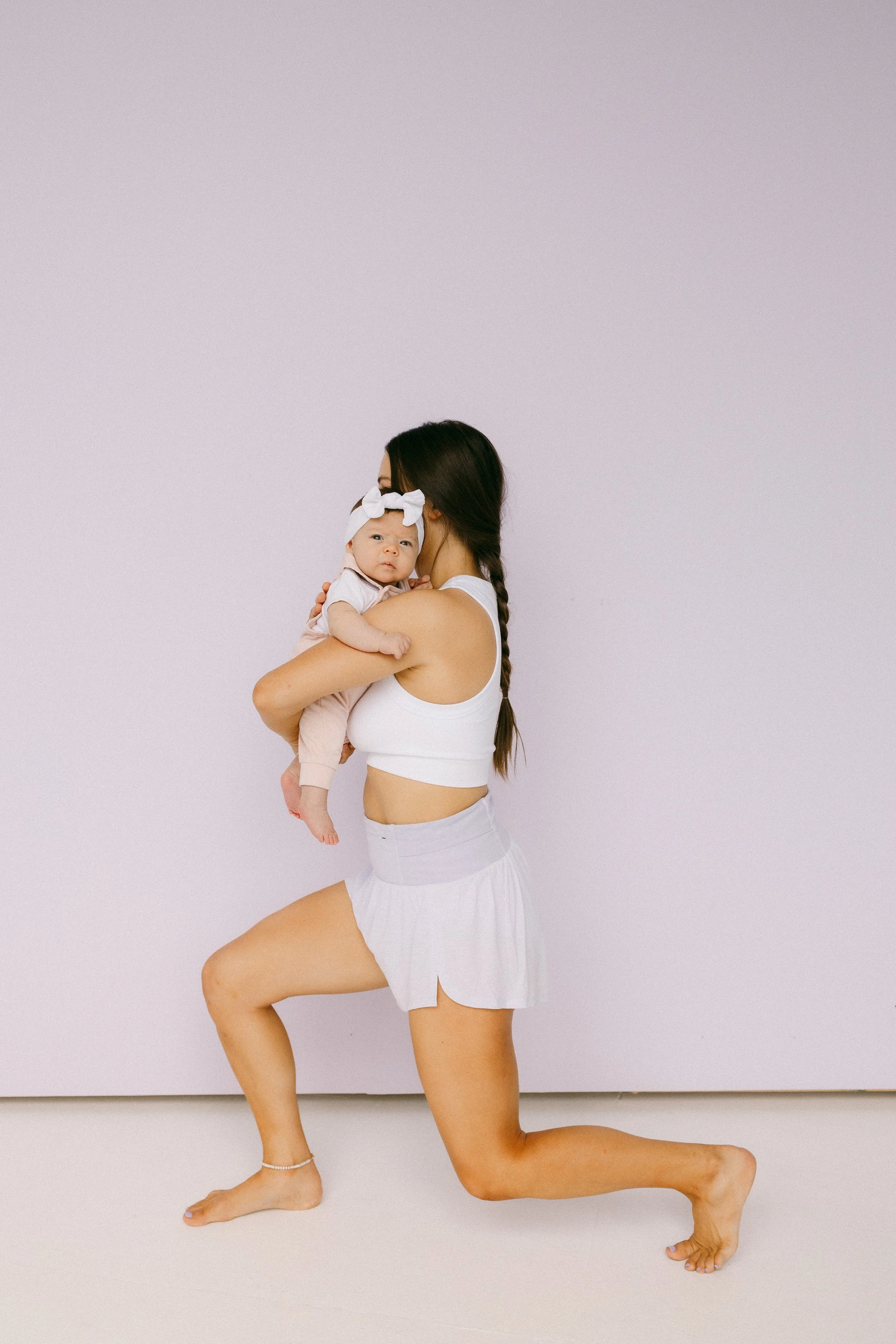
Get as close as you can before lifting
Bring your baby or toddler in toward your chest as you lift
Hold them close to your center of gravity
Think of it like this → holding a gallon of milk close to your body feels much easier than holding it out in front of you. The same idea applies here!
What to focus on:
Avoid reaching or lifting with your arms extended
Keep your child close from the start of the lift through standing
Stay connected through your core as you bring them in
tip 4: real life happens…and that’s okay!
Let’s be real, you’re not always going to have time to think about perfect form before picking up your baby or toddler up. Or sometimes when moving about the house, working in the yard, or doing other daily things, you just move without thinking too much about it, and that’s okay!
Sometimes you’re moving quickly, reacting, or just trying to get through the moment, and I get it. Remember here that the goal isn’t perfection. It’s awareness! The more you start to notice how you’re moving throughout the day, the easier it becomes to make small adjustments that better support your body.
What to focus on:
Slow down when you can
Pay attention to how you’re lifting, carrying, and moving
Look for patterns that might be contributing to aches or discomfort
And when you can, incorporate tips 1-3 (and when you can’t, don’t stress!)
Those small shifts in awareness can go a long way in how your body feels over time.
tip 5: train for real life with strength training
The way you move when you’re strength training directly impacts how you move in your daily life. When you strength train with intention, you’re not just building muscle…you’re practicing the same movement patterns you use every day! Your movements to build strength are also your functional movements you use in a variety of ways throughout the day. Things like:
Squatting
Hinging
Lifting
Carrying
All of it translates! That’s how these movements start to feel more natural and automatic when you’re picking up your baby or toddler.
What to focus on:
Practice proper form during your workouts
Pay attention to your breath and core connection
Move with control, not just momentum
And if you don’t have a strength training program that works for you, as a busy parent, Mind Body Core has got you!
The more you train these patterns, the less you have to think about them in real life because it becomes more like second nature.
how to progress from here
Lifting your baby or toddler is something you’ll do every single day, even as they get older, it still happens - and if it’s not that, then it’s going to be something else. It’s unavoidable! Which is why it’s important to learn now and do better!
By bringing a little more awareness to how you move, supporting your core and pelvic floor, and building strength over time, these everyday movements can start to feel easier and more sustainable.
And those small changes? Over time, they add up in a big way!
ready for guidance + an actual plan?
If you’re looking for more support with this, this is exactly what we focus on inside Mind Body Core.
Inside MBC, you’re not just doing random workouts or movements, you’re building strength in a way that actually translates to your everyday life! Mind Body Core has so many different programs with specific and intentional plans to fit you and your life EXACTLY where you are, whether you’re trying to conceive, currently pregnant, early postpartum, 1 or more years postpartum or just a woman looking for support!
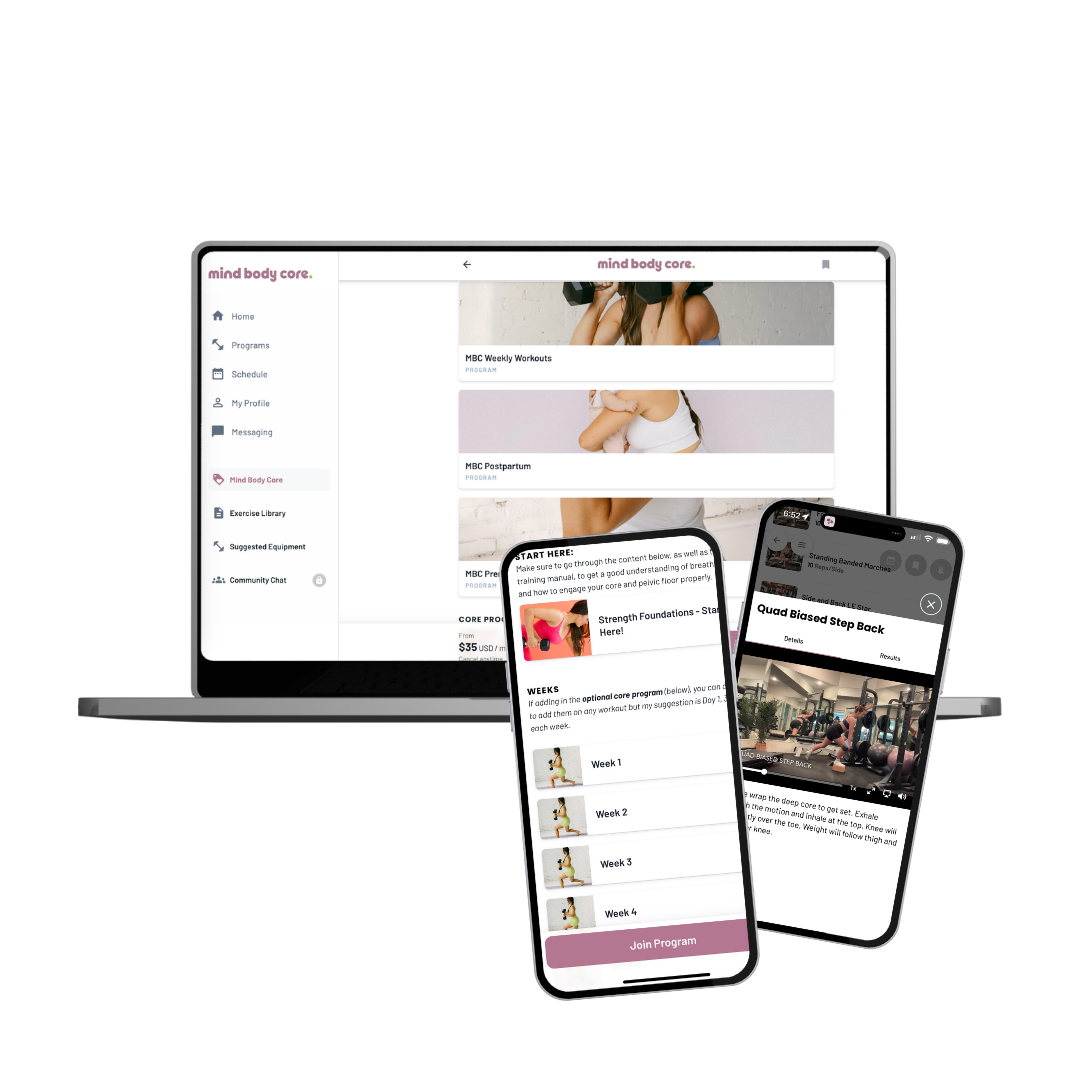
If strength training guidance is what you’re looking for, you could start by looking at:
Weekly workouts that train real-life movement patterns
An 8-week strength foundations program to build proper form and control
Mobility woven into everything so your body can move well, not just move more
And remember, joining MBC as a monthly (or annual) member gives you access to ALL of the programs inside! Every single thing - you have access to once you join.
Because the goal isn’t just to feel stronger during a workout, it’s to feel stronger picking up your baby, carrying them, and moving through your day and ALL the other necessary things that parenthood brings to our daily lives.
You can explore Mind Body Core and all the programs inside by clicking the button below!