
5 Pelvic Floor Exercises to Start Healing Your Core Before Your 6 Week Postpartum Checkup
Written by Dr. Lizzie Kieffer, DPT.
Your body goes through a lot during pregnancy, labor, and birth, and those first few weeks postpartum are a time for healing, reconnecting, and slowly rebuilding from the inside out. And contrary to what you may have heard or been told, you do not have to wait until 6 weeks postpartum to start.
The real question isn’t if you can begin, it’s how.
Because while the simple answer is yes, it matters what exercises you’re doing and how you’re approaching them. This phase isn’t about jumping back into workouts or pushing any sort of intensity. It’s about restoring your connection to your core and pelvic floor, supporting your healing tissues, and creating a strong foundation for everything that comes next.
In this blog, I’m walking you through 5 safe and effective pelvic floor exercises you can begin before your 6 week postpartum checkup, along with what to watch for and how to know if your body is ready for more.
before you begin: a few important things to keep in mind
All of the exercises listed out below are safe (and actually encouraged) to begin before your 6 week postpartum checkup and are designed to help you gently reconnect with your core and pelvic floor. These are not meant to be intense or exhausting. Instead, they focus on building awareness, control, and a strong foundation for future movement.
As with anything postpartum, your body is unique. You may need to modify positions, reduce range of motion, or take additional rest depending on how you’re feeling. The goal here is not to push through, but to move with intention and stay in tune with your body as it heals. As always, make sure to listen when it speaks.
exercise 1: diaphragmatic breathing
Diaphragmatic breathing is the foundation of core and pelvic floor recovery postpartum. Before adding strength or intensity, we want to re-establish how your breath, core, and pelvic floor work together.
This type of breathing helps improve core stability, reduce tension in the body, and support healing as your body adjusts after pregnancy and delivery. View the video below for a really nice demonstration and tutorial!
How to do it:
Inhale: Breathe in through your nose and think about expanding 360 degrees — your rib cage, abdomen, back, and pelvic floor all gently fill with air
Exhale: Start with a gentle pelvic floor contraction (like stopping the flow of urine), then draw your hip bones together, bring your belly button slightly toward your spine, and allow your rib cage to soften down
Think of this as a gentle “zipper” closing from your pubic bone up toward your sternum.
How often:
Practice for about 5 minutes daily, or a few times per week in different positions (lying down, seated, or standing)
exercise 2: supine marches
Supine marches are a great next step after diaphragmatic breathing because they begin to introduce gentle movement while maintaining that deep core and pelvic floor connection.
This exercise helps you build stability through your core while your limbs are moving, which is essential for returning to everyday activities like walking, carrying your baby, and getting up and down from the floor.
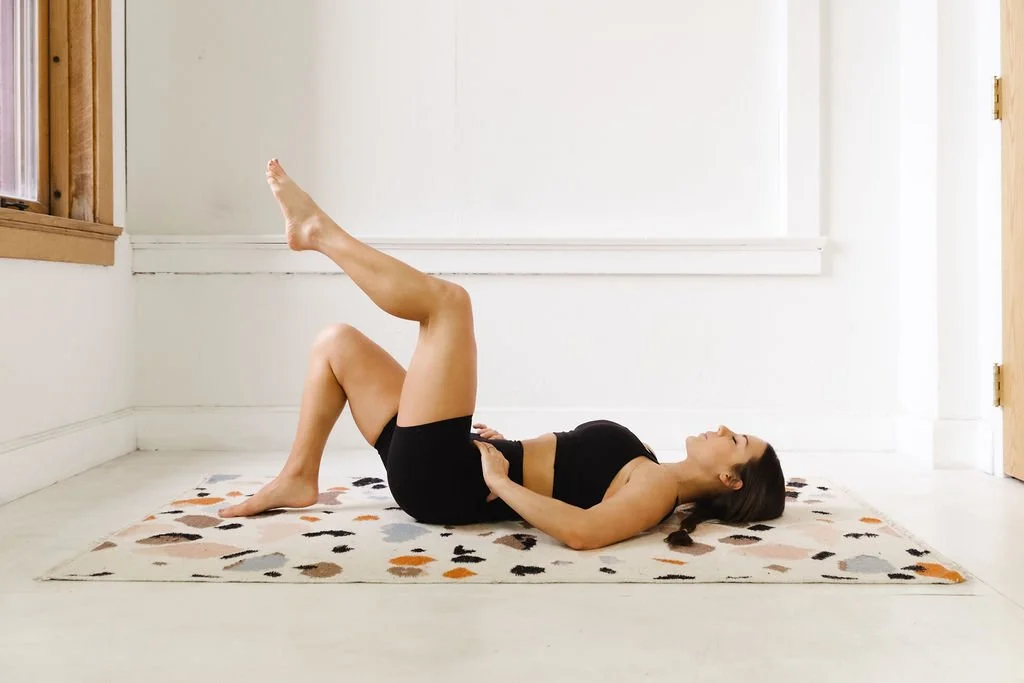
How to do it:
Start lying on your back with your rib cage stacked over your pelvis
Inhale into your core and pelvic floor to prepare
As you exhale, gently engage your pelvic floor and deep core and lift one leg up (like a march)
Inhale as you lower the leg back down with control
Alternate sides, continuing to match your breath with the movement
You can keep your feet flat on the ground or come onto your toes to increase the challenge slightly
What to focus on:
Keep your back in a neutral position (not pressing it into the floor)
Maintain a steady pelvis without rocking side to side
Move slowly and with control, focusing on the connection to your core
How often:
Start with 8–10 reps per side, a few times per week, focusing on quality over quantity!
exercise 3: bird dog
Bird dog is a powerful exercise for building cross-body coordination and stability through your core and pelvic floor. It helps your body learn how to stay strong and supported while your arms and legs are moving, which again, translates directly into everyday movements.
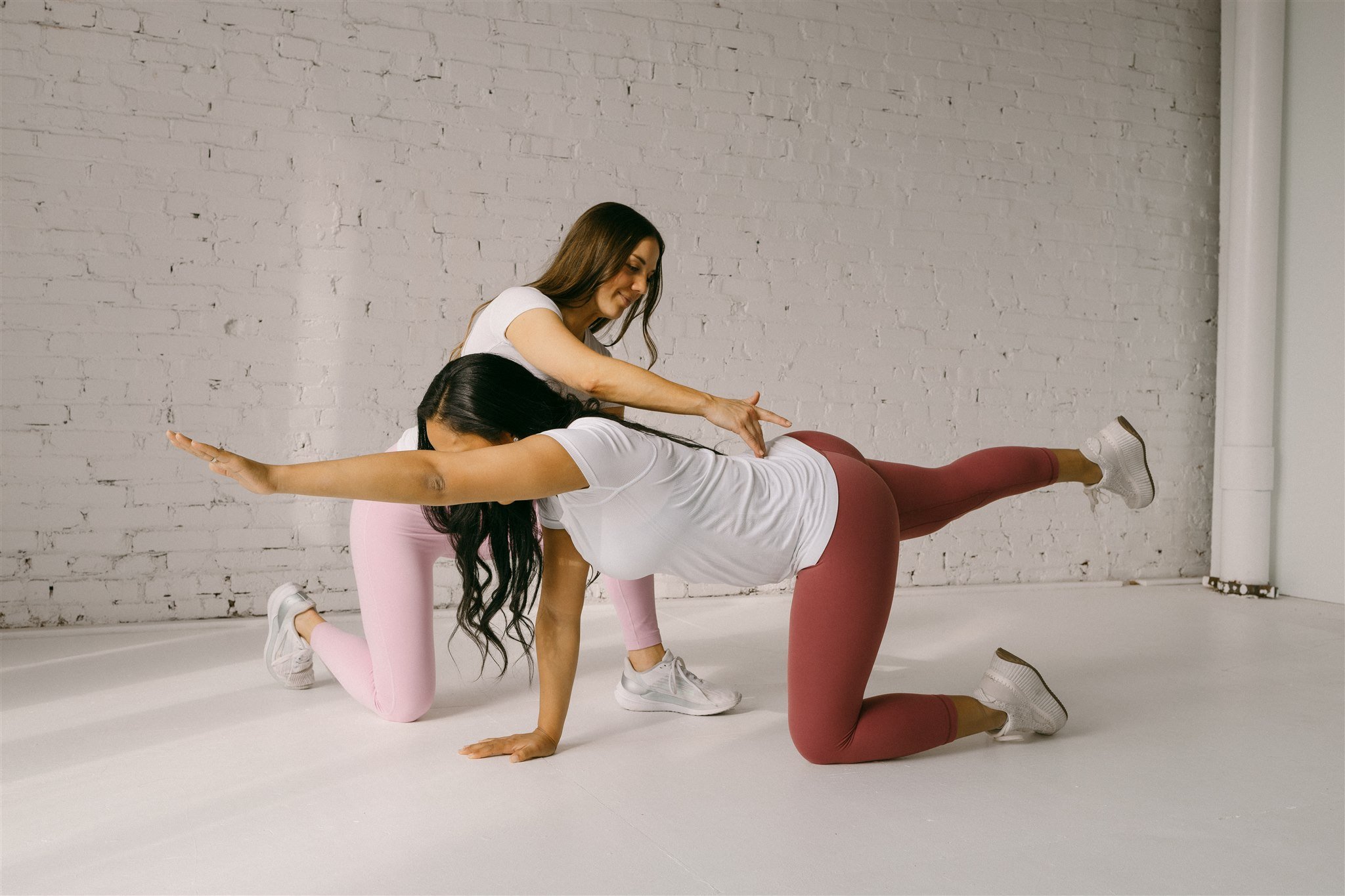
How to do it:
Start on your hands and knees in a neutral spine position
Inhale to prepare
As you exhale, gently engage your pelvic floor and deep core, then extend one arm and the opposite leg out
Inhale as you bring your arm and leg back in
Alternate sides, continuing to match your breath with the movement
*Modification Tip: If you’re earlier postpartum or need a modification, keep your leg on the ground and simply slide it back instead of lifting it.
What to focus on:
Keep your spine neutral (no arching or rounding)
Maintain a steady pelvis without rocking side to side
Move slowly and with control, focusing on stability
Think about staying as “still” as possible through your torso as your limbs move
How often:
Start with 8-10 reps per side, a few times per week, focusing on control over range.
exercise 4: pelvic tilts
Pelvic tilts are a gentle way to reconnect with your body and improve mobility through your pelvis. This movement helps you learn how to control and move your pelvis independently from your spine, which is an important foundation for both core function and overall movement.
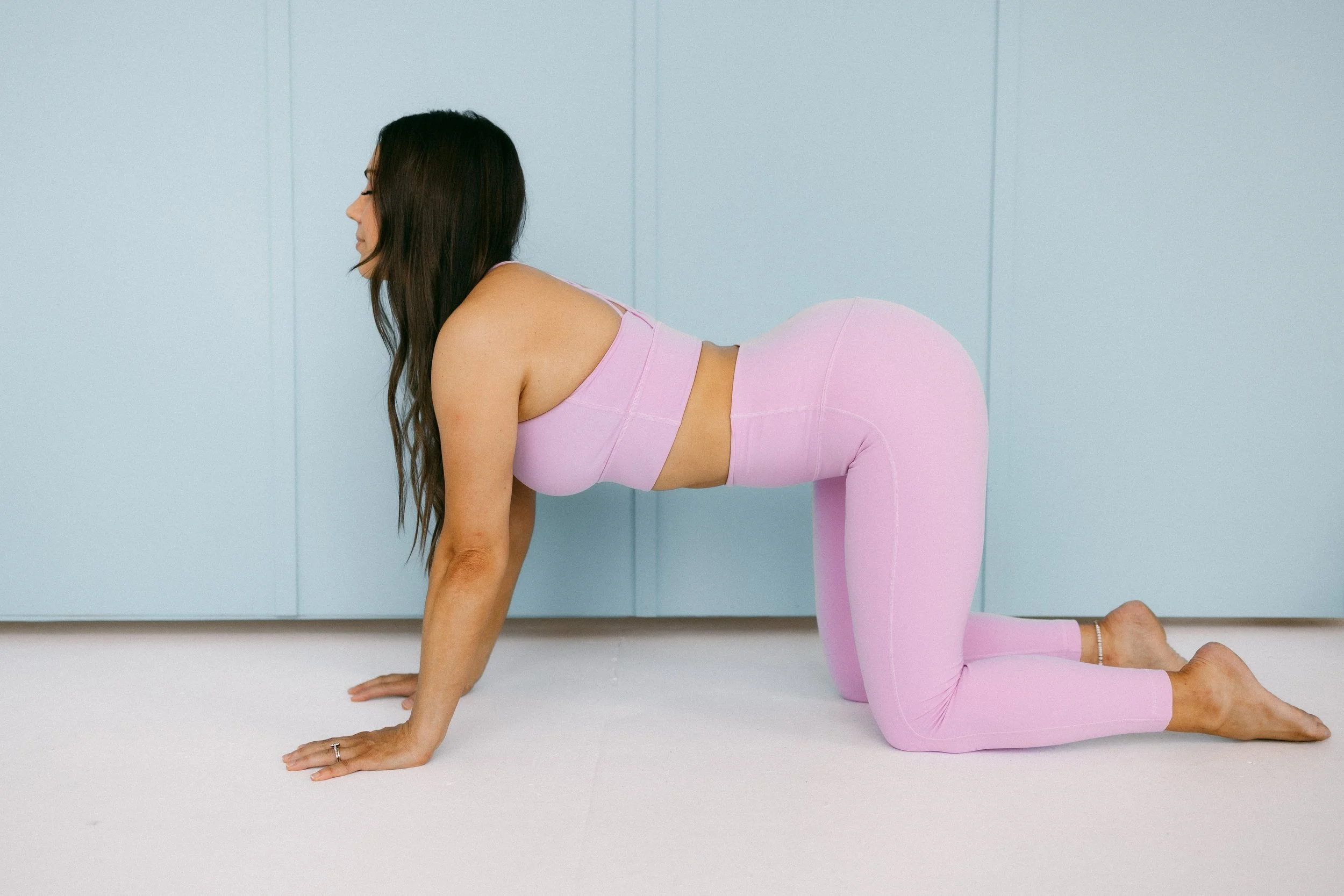
How to do it:
Start lying on your back with your knees bent and feet flat on the floor
Begin to gently rock your pelvis back and forth
Think about moving between a slight tuck (posterior tilt) and a slight arch (anterior tilt)
Breathe normally as you move, keeping the motion slow and controlled
This is not a full cat-cow movement - the focus stays in the pelvis rather than the entire spine
What to focus on:
Keep the movement isolated to your pelvis (not your upper or lower back)
Move through a comfortable range of motion
Focus on control and awareness rather than force or effort
How often:
Perform for 8–10 slow repetitions, a few times per week, or as a gentle daily reset.
exercise 5: sidelying ball push
The sidelying ball push is a great way to build connection and strength through your deep core and obliques while staying in a supported position. It adds a small amount of resistance to help you better feel your core engage.
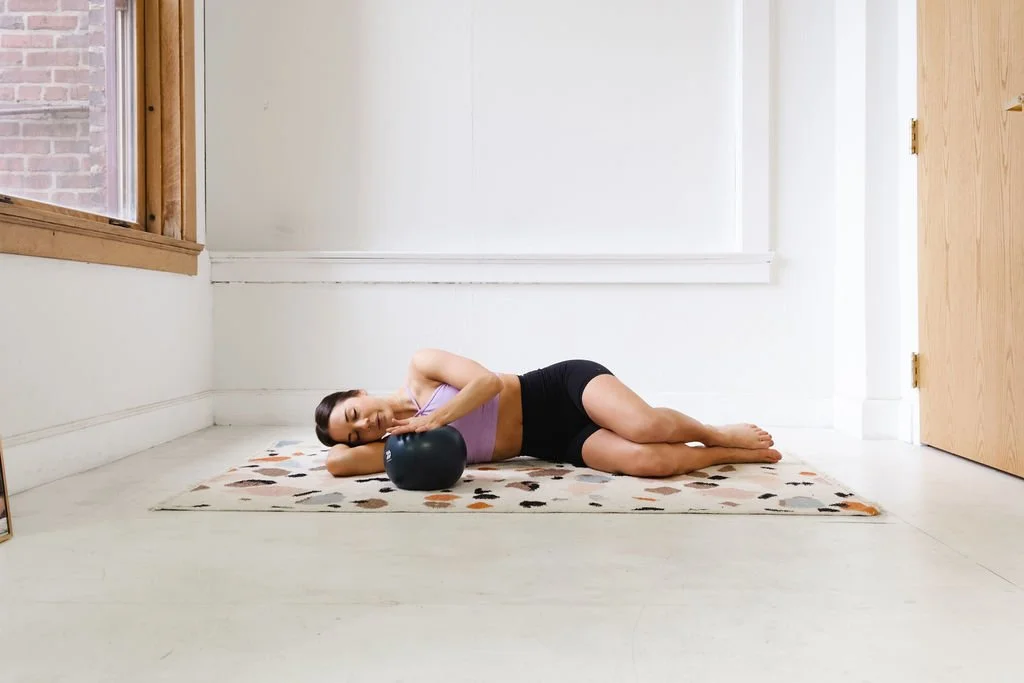
How to do it:
Lie comfortably on your side with your head supported
Place a small ball, pillow, or any soft object in front of you
Inhale into your abdomen and pelvic floor
As you exhale, gently engage your pelvic floor and deep core while pressing down into the ball
Inhale as you release the pressure
Repeat, then switch sides
No ball? No problem! You can use a pillow, a kids ball, or anything soft that gives you a little resistance.
What to focus on:
Match your breath to the movement (exhale = engage and press)
Keep the movement controlled and intentional
Notice the engagement through your core, especially the obliques on the top side
How often:
Perform 8 repetitions per side, a few times per week, focusing on connection over intensity.
bonus: child’s pose for pelvic floor relaxation
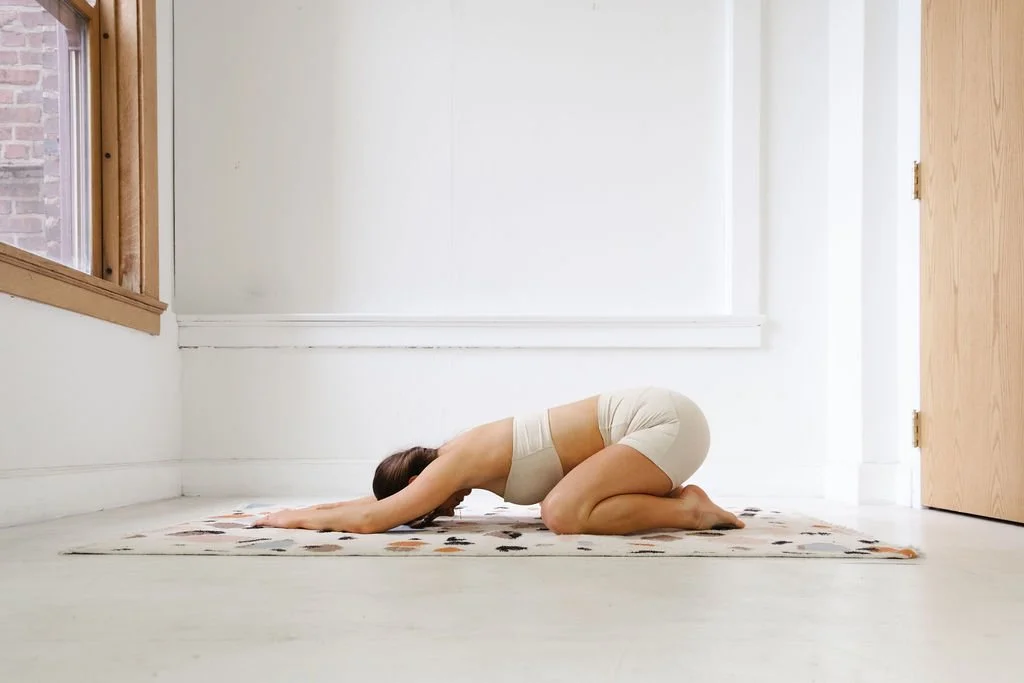
Child’s pose is a simple but powerful way to relax your pelvic floor and connect back to your breath. While a lot of early postpartum work focuses on gentle engagement, learning how to fully relax your pelvic floor is just as important.
How to do it:
Start in child’s pose with your hips sitting back and your head supported
Take a deep inhale and think about expanding 360 degrees - your belly, rib cage, back, and pelvic floor all gently expand
As you exhale, allow everything to soften and relax (no active engagement here)
Continue for several slow, controlled breaths
Think of your pelvic floor lengthening and opening on the inhale, then completely letting go on the exhale.
What to focus on:
Let your belly fully expand as you inhale
Feel gentle pressure move down into your pelvic floor
Completely relax on the exhale (no squeezing or lifting)
Move slowly and intentionally with your breath
How often:
Start with 5 deep breaths and repeat as needed, especially if you’re feeling tension or heaviness.
red flags to watch for when starting postpartum exercise
As you begin incorporating these exercises, it’s important to stay in tune with your body. While gentle movement can support healing, there are certain signs that indicate your body may need more time or additional support.
If you notice any of the following, pause your exercise and reach out to your healthcare provider:
Increased vaginal bleeding
Increased discomfort at your incision site
Pulling or strain around stitches
A feeling of pelvic heaviness or pressure during movement
Increased dizziness or lightheadedness
Discharge or leakage from an incision
High or persistent fever
Severe or ongoing abdominal pain
Difficulty breathing
If you’re ever unsure, it’s always best to check in with your provider or a pelvic floor physical therapist for guidance!
A few additional things to keep in mind:
If you had perineal tearing, be mindful of positions that create pulling or pressure early on. For example, you may need to modify child’s pose to a higher position
And if you had a C-section, these exercises are still safe, but pay close attention to any pulling or discomfort around your incision.
how to progress from here
These exercises are just the starting point. As your body continues to heal and you build more connection to your core and pelvic floor, you can gradually begin to progress your movement and strength, and if you’re wondering what that progression should look like, I walk you through it step by step in this blog:
When Can You Exercise Postpartum? A Realistic Timeline for Recovery
This will help you understand how to safely move from early postpartum recovery into more structured strength training, cardio, and beyond. And if you’re looking for more support, read below for full details!
ready for more support?
If you’re looking for more guidance, structure, and support during your postpartum recovery, the Postpartum Program inside MBC was designed to walk you through this entire process step by step.
Inside, you’ll find:
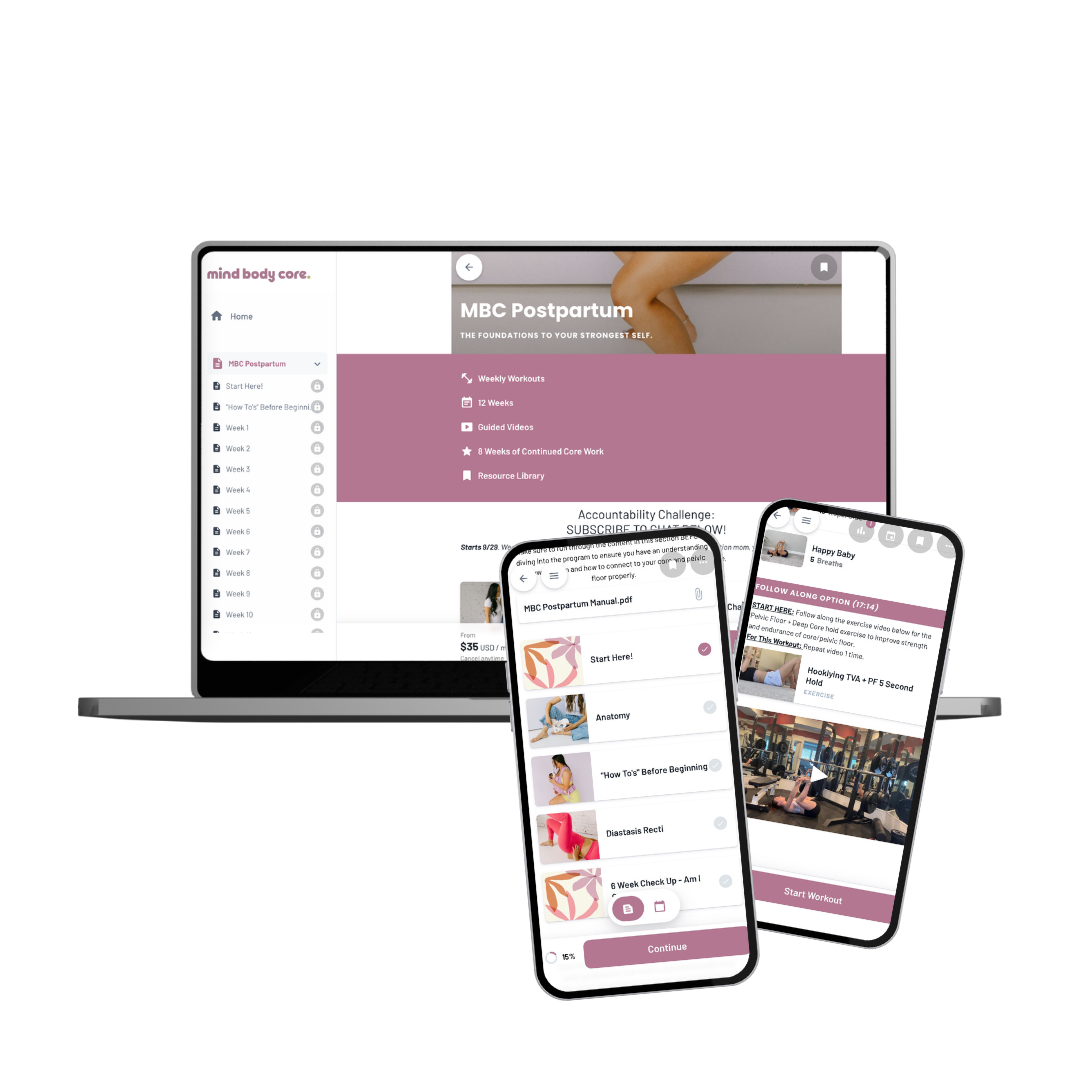
A full 12-week postpartum recovery and strength program
An additional 8 weeks of continued core progression
A complete resource library + postpartum education
A dedicated C-section recovery program (if needed)
Return to running support and guidance
A mini workout library for busy days
Breastfeeding/feeding mobility flows
Low impact cardio sessions
A full postpartum nutrition program (with recipes, meal plans, and education)
Breastfeeding support resources
Babywearing workouts + education
And a full pain relief library with targeted support for common postpartum concerns like incontinence, pelvic pain, low back pain, upper back tension, and more
How to gain access:
Bundle the prenatal + postpartum programs and get lifetime access to both
Purchase the postpartum program on its own for lifetime access
Or join MBC as a member and get access to everything (including all programs, resources, and future updates) for as long as you maintain your membership (monthly or annual, with the annual option saving you a full month)!
No matter where you are in your journey, you don’t have to figure this out on your own. Explore Mind Body Core by clicking the button below!