
When Can You Exercise Postpartum? A Realistic Timeline for Recovery
Written by Dr. Lizzie Kieffer, DPT.
Oftentimes, after giving birth, the only timeline women are given is the 6-week check-up. But how are you supposed to know when it’s actually okay to return to exercise…and more specifically, at what level of intensity?
It can feel like the advice is to do nothing until your 6-week check-up, and then once you’re “cleared,” you can do anything.
But honestly…neither of those is right.
Doing nothing for 6 weeks doesn’t prepare you to do everything after 6 weeks. And doing too much in those early weeks isn’t it either. So what should we be doing in that in-between?
Well, that’s exactly what we’re going to cover in this blog.
Here’s the thing - you don’t have to wait until 6 weeks to start moving your body. But what exercise looks like early postpartum is often very different than what most people expect. Your body doesn’t heal on a strict timeline, and every woman’s experience will look a little different depending on birth, symptoms, sleep, hormones, and overall recovery.
But we can use general healing phases to guide what types of movement are supportive (and what might be too much too soon).
In this blog, I’m going to walk you through a realistic postpartum exercise timeline so you can understand what your body needs, what to focus on in each phase, and how to rebuild strength in a way that actually supports your recovery.
0-2 weeks postpartum: foundational recovery and gentle movement
The first 0–2 weeks postpartum are not about “getting back into workouts”. They are about healing, recovery, and laying the foundation for everything that comes next.
Your body has just gone through pregnancy, labor, and delivery…and whether you had a vaginal birth or a C-section, there is a significant amount of healing happening internally. This phase should feel simple, because it is.
Focus on:
breath work
Learning how to reconnect to your diaphragm, core, and pelvic floor through gentle breathing is one of the most important things you can do early on. This helps restore pressure management and begins rebuilding that mind-to-muscle connection.gentle mobility
Small, controlled movements can help reduce stiffness and support circulation without putting stress on healing tissues.supporting recovery
Rest, hydration, and nourishment matter more than anything else right now. Your body is doing a lot behind the scenes to repair and recover.
A few important things to keep in mind:
If you had a more complicated birth, tearing, or a C-section, your timeline may need to be adjusted slightly. (And if you had a C-section, make sure to check out my full C-section recovery blog for more specific guidance.)
One of the biggest goals in this phase is to improve circulation and gently reintroduce movement without overloading your system.
What to avoid in the first 2 weeks
This is just as important as what you should be doing. And maybe these things below seem obvious, but depending on your life style and what you were doing pre-pregnancy, a gentle reminder may be needed.
Make sure to avoid:
high intensity exercise
heavy lifting
traditional core work (crunches, sit-ups, planks)
anything that causes pain, pressure, or heaviness
More is not better here. In fact, doing too much too soon can actually slow down your recovery and make it harder to rebuild properly later on. Think of this phase as your reset. It may not feel like much, but this is where you are setting the stage for how your core, pelvic floor, and body will function moving forward.
And when this phase is done well, everything that comes after becomes so much more effective.
2–6 weeks postpartum: early postpartum exercise
This phase is where we begin to gently build on that foundation from the first couple of weeks. You’re not jumping back into full workouts yet, but you are starting to feel more connected to your body and ready for a bit more movement.
This is what I like to call early postpartum exercise.
What to focus on during this phase
deep core + pelvic floor connection
Now that you’ve started reconnecting through breath work, we begin to layer in more intentional engagement of the deep core and pelvic floor. This is still gentle. We’re not bracing or forcing anything, but instead focusing on coordination and control.more integrated movement
You can begin adding in simple, full body movements that reflect real life, things like sit to stands, light squats, or supported upper body work. The goal is to start tying everything together in a way that feels natural and controlled.gradual resistance
This is where you can start introducing light resistance like bands or small weights, depending on how your body feels. Think low load, high control.
What this phase should feel like
By the end of this phase, you may start to feel:
→ a little stronger
→ more stable through your core
→ more confident in your movements
But it’s still important to keep things slow and intentional. If something feels off, like heaviness, pressure, leaking, or pain, that’s your body asking you to scale back or adjust.
This phase is all about building confidence and connection, not rushing ahead, but steadily progressing so your body is ready for the next stage of rebuilding strength.
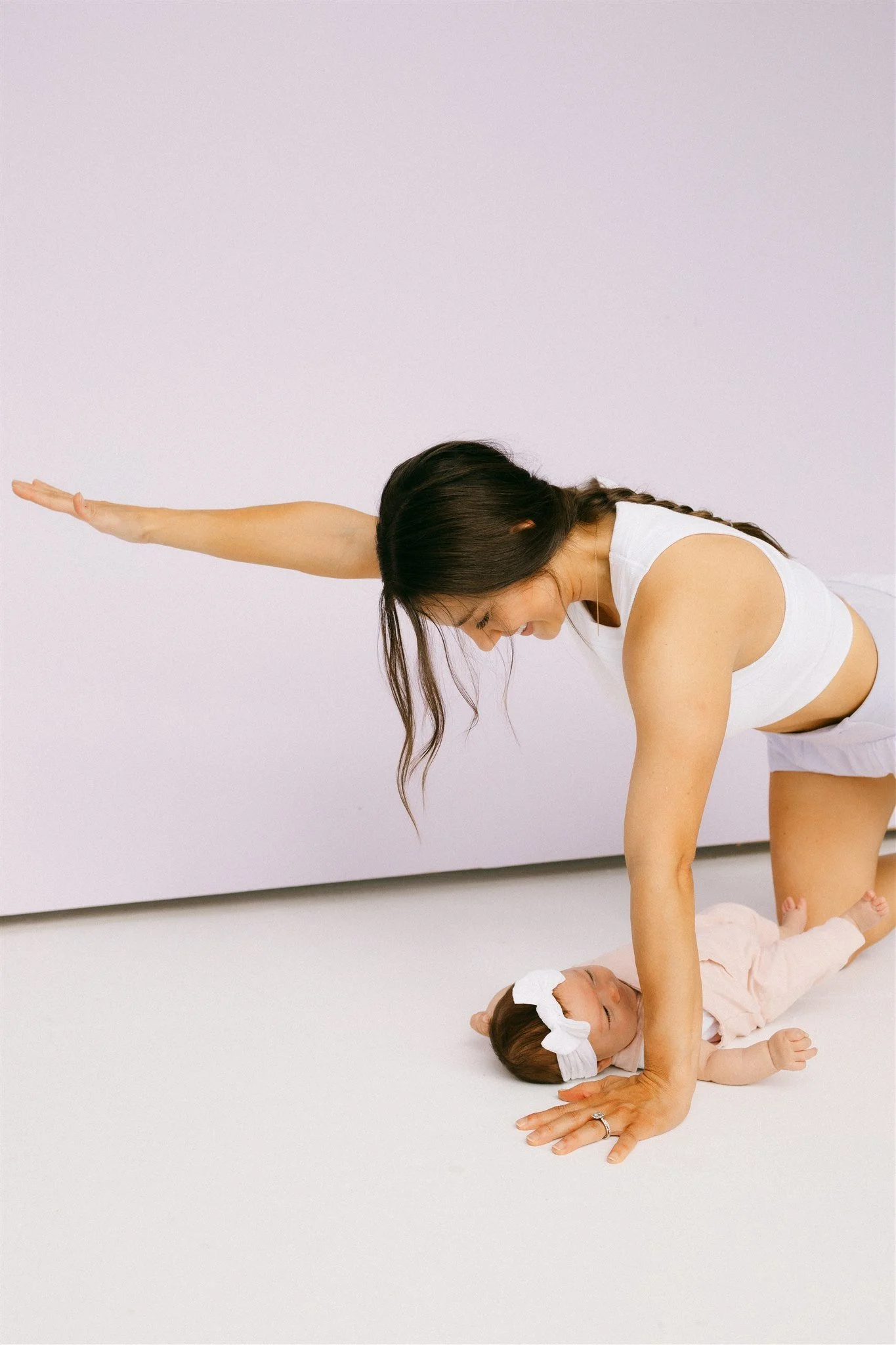
6–12 weeks postpartum: rebuilding strength
This is the phase where we begin to more intentionally rebuild strength. For many women, this is right around the time they’ve been “cleared” at their 6-week appointment. But instead of jumping straight back into everything, this is where we continue to build on the foundation you’ve already created.
Because remember…being cleared doesn’t mean you’re fully healed. It just means your body is ready to progress, not skip ahead.
What to focus on during this phase
increasing resistance
You can begin adding more resistance to your movements - progressing from bands and light weights to more challenging loads as your body tolerates it. The goal here is to start rebuilding muscle and strength in a controlled way.challenging the deep core + pelvic floor
Now that you’ve built connection and coordination, we can begin to challenge these systems a bit more. This might look like more dynamic movements, longer time under tension, or more complex exercises that require stability and control.full body integration
Exercises start to look more like traditional strength training, but with proper core and pelvic floor engagement guiding everything. We’re tying upper body, lower body, and core together.building endurance
This is also where we begin building endurance in your core and pelvic floor...helping you tolerate longer workouts, daily movement, and increased activity levels.
What this phase should feel like
By the end of this phase, you may start to feel stronger in your workouts, more confident in your body and more capable during daily movement, BUT it is still normal to have moments where things still feel a little “off”.
Recovery is not linear, and your body is still adapting, especially with things like sleep, hormones, and (for many) breastfeeding. This phase is where strength really starts to come back. But the key is continuing to progress with intention, so you’re building strength on a solid foundation — not rushing past it.
3–6 months postpartum: strength and impact training
This phase is where we continue building strength and begin introducing more dynamic movement and impact. For many women, this is when workouts start to feel more familiar again. And while that’s exciting…it’s still important to stay intentional with how you progress to avoid injury and setbacks.
What to focus on during this phase

continuing to build strength
You can continue increasing resistance and working through more traditional strength training patterns. This is where you start to really rebuild muscle and feel more powerful in your movements.introducing impact (gradually)
If your goal includes things like running, jumping, or higher intensity workouts, this is typically when we can begin to reintroduce those. But this should be gradual and based on how your body responds, not just the timeline.return to running progression
For many women, this is the phase where a structured return-to-running plan becomes appropriate. This helps ensure your pelvic floor, core, and joints are ready to handle impact.
What this phase should feel like
You may start to feel more like yourself again…but it’s also very normal if you don’t fully feel “back” yet. Remember that things like:
→ hormones
→ breastfeeding
→ sleep (or lack thereof)
→ overall life demands
…all play a role in how your body feels and performs. For some women, it can take up to a year (or even longer) to feel completely back to normal.
This phase is about continuing to build, not rushing to some arbitrary finish line. You’re layering strength, endurance, and impact on top of the foundation you’ve already created…which is exactly what allows long-term results to actually stick!
6+ months postpartum: return to full function
This phase is where you begin transitioning into full strength, full movement, and higher intensity training. For many women, this is when workouts start to feel more like they did pre-pregnancy. You may feel stronger, more coordinated, and more confident in your body in this phase, but it’s important to remember…this doesn’t happen overnight.
What to focus on during this phase
increasing strength and load
You can continue progressing your strength training by increasing weight, intensity, and complexity of movements. This is where you can really challenge your body in a way that builds long-term strength.higher impact and intensity
Running, jumping, and higher intensity workouts can be incorporated more regularly…as long as your body is tolerating them well. This should still feel controlled and supported, not forced.
What this phase should feel like
Again, we are ONLY 6+ months out from having a baby! Even in this phase, it’s completely normal if things don’t feel exactly like they used to.
But also, it’s really important to listen to the things that your body is telling you. If you are increasing load, impact and/or intensity and you are experiencing things like leakage, pressure or a sensation of heaviness in your pelvic floor, or sudden onset of pain or discomfort, those are all things to pay attention to as indicators that something in your body needs more attention before progressing further.
Gentle reminder: for some women, it can take up to a year or even two to fully feel like themselves again, especially when you factor in hormones, sleep, and the demands of motherhood. This phase isn’t about rushing back to your “old self”, but instead, it’s about moving forward with a body that is strong, supported, and functioning well for the life you’re living now!
ready to know exactly what to do postpartum?
Inside the MBC Postpartum Program, you’re guided step-by-step through those early phases we just walked through - from breath work and core connection in the first few weeks, to rebuilding strength, and eventually returning to full movement and impact.
And the best part is…it doesn’t stop there.
With an MBC membership, you have access to everything you need for every phase of your journey:
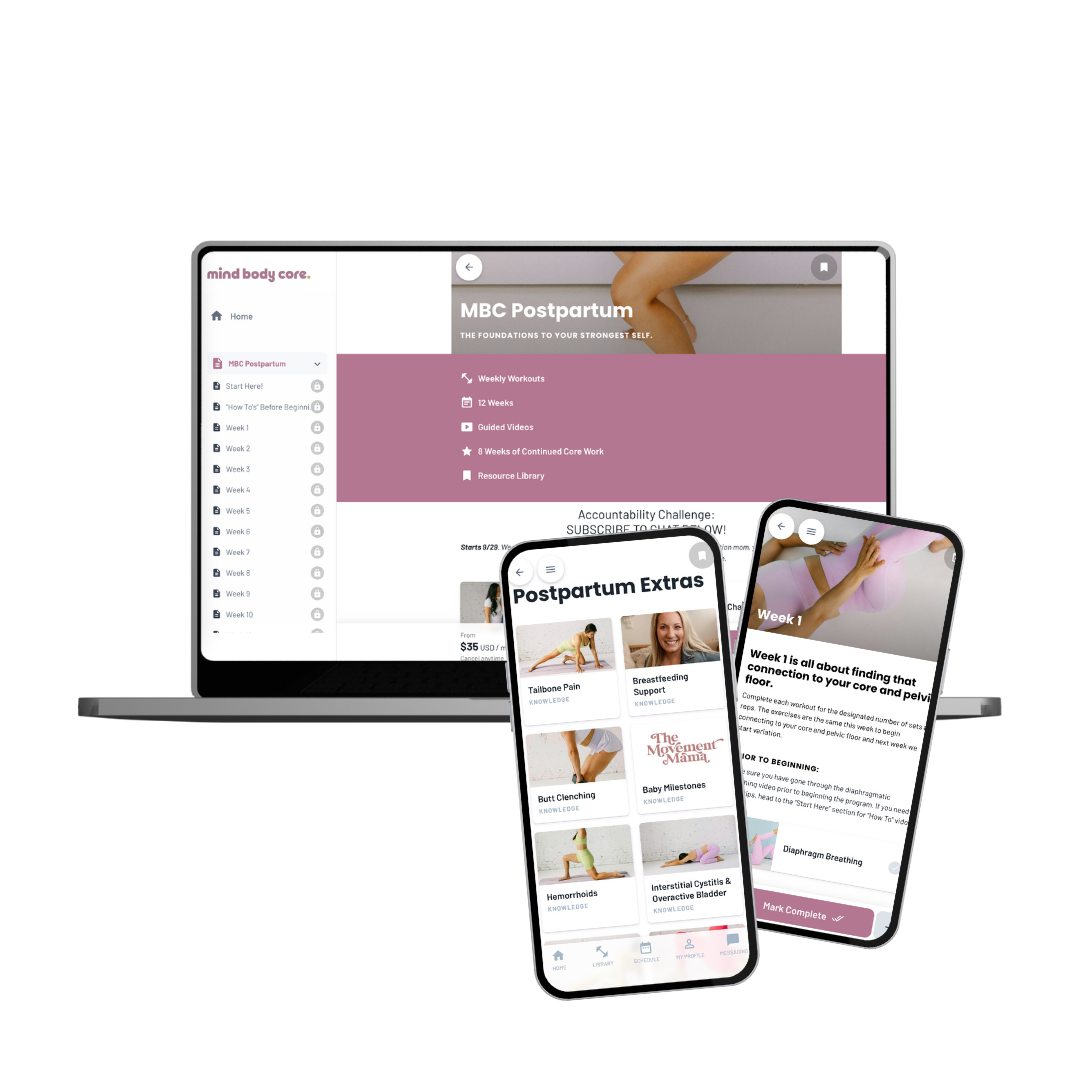
postpartum recovery program (prenatal programs too!)
pain relief programs (if something pops up along the way)
the 8-week strength foundations program to rebuild strength
weekly workouts to stay consistent
mobility programs to support how your body moves and feels
and honestly SO MUCH MORE!
So instead of finishing one program and wondering what’s next…you always have a plan. Whether you’re early postpartum, a few months in, or beyond, MBC is designed to grow with you through every season of life!
Click the button below to peruse through the app, check out the different programs and join as either a monthly or annual member!