
Written by Dr. Lizzie Kieffer, DPT.
Why would someone who’s had a C-section need pelvic floor physical therapy? The baby did not pass through the pelvic floor during birth, right? So why would the pelvic floor be affected and is pelvic floor recovery during the postpartum time frame even necessary for this particular group?
Honestly, these are valid questions! I can understand the reasoning and why someone may wonder what the point of pelvic floor rehab is if baby was not born through the pelvic floor. But I think it’s really important to understand that your pelvic floor is involved in SO much more than childbirth, and just because you didn’t deliver vaginally doesn’t mean your pelvic floor wasn’t affected by pregnancy, labor or the recovery process that follows.
Whether your C-section was planned or unexpected, your body has been through some significant changes. From the demands of carrying a baby for nine months to healing from major abdominal surgery, there are several reasons your pelvic floor may need attention postpartum. So, let's break down exactly how a C-section can affect your pelvic floor, why pelvic floor rehab deserves a place in your recovery and what that recovery should actually look like!
pregnancy and the affect on your pelvic floor
Your pelvic floor was WORKING your entire pregnancy! As your baby grew, your body adapted to accommodate the increasing weight and pressure of pregnancy. Your pelvic floor muscles, which help support your pelvic organs and play an important role in bladder and bowel control, were definitely a part of that process. Over the course of roughly nine months, those muscles had to adapt to changing demands, regardless of whether you ultimately delivered vaginally or via C-section.
And it's not just about the weight of your growing baby. Pregnancy also changes your posture, breathing mechanics and how your core manages pressure during everyday movement. Your pelvic floor works alongside your diaphragm, abdominal muscles and other surrounding muscles to help manage those demands, whether you're walking, lifting, exercising or simply going about your day.
That's why symptoms like urinary leakage, pelvic heaviness or difficulty coordinating your deep core and pelvic floor can occur even in women who never experience a vaginal delivery. A C-section may change how your baby enters the world, but it doesn't undo the physical demands your pelvic floor experienced throughout pregnancy.
And that's reason number one why pelvic floor recovery deserves attention after a C-section!
labor + pushing affect your pelvic floor, even if you ultimately have a c-section
Not every C-section experience looks the same. Some women have a planned C-section and never go into labor, while others fully expect to deliver vaginally and end up needing a C-section after hours of labor, or even after actively pushing.
I realize this doesn’t apply to everyone who’s had a C-section, but it’s important to know for those who did…your pelvic floor may have already experienced many of the demands of labor and childbirth before your baby was delivered via C-section.
During labor, contractions, pressure from your baby's descent and changes in your pelvic floor muscles all play a role in preparing your body for delivery. And if you reached the pushing stage, your pelvic floor experienced additional stretching and pressure as you worked to move your baby through the birth canal, even if a vaginal delivery didn’t end up being the end result.
The birth of your baby may have ended in a C-section, but everything your body (and pelvic floor specifically) went through BEFORE that still matters!
how c-section scar healing can affect your pelvic floor
A C-section is MAJOR abdominal surgery, and I think it's important to understand just how much your body goes through during the procedure.
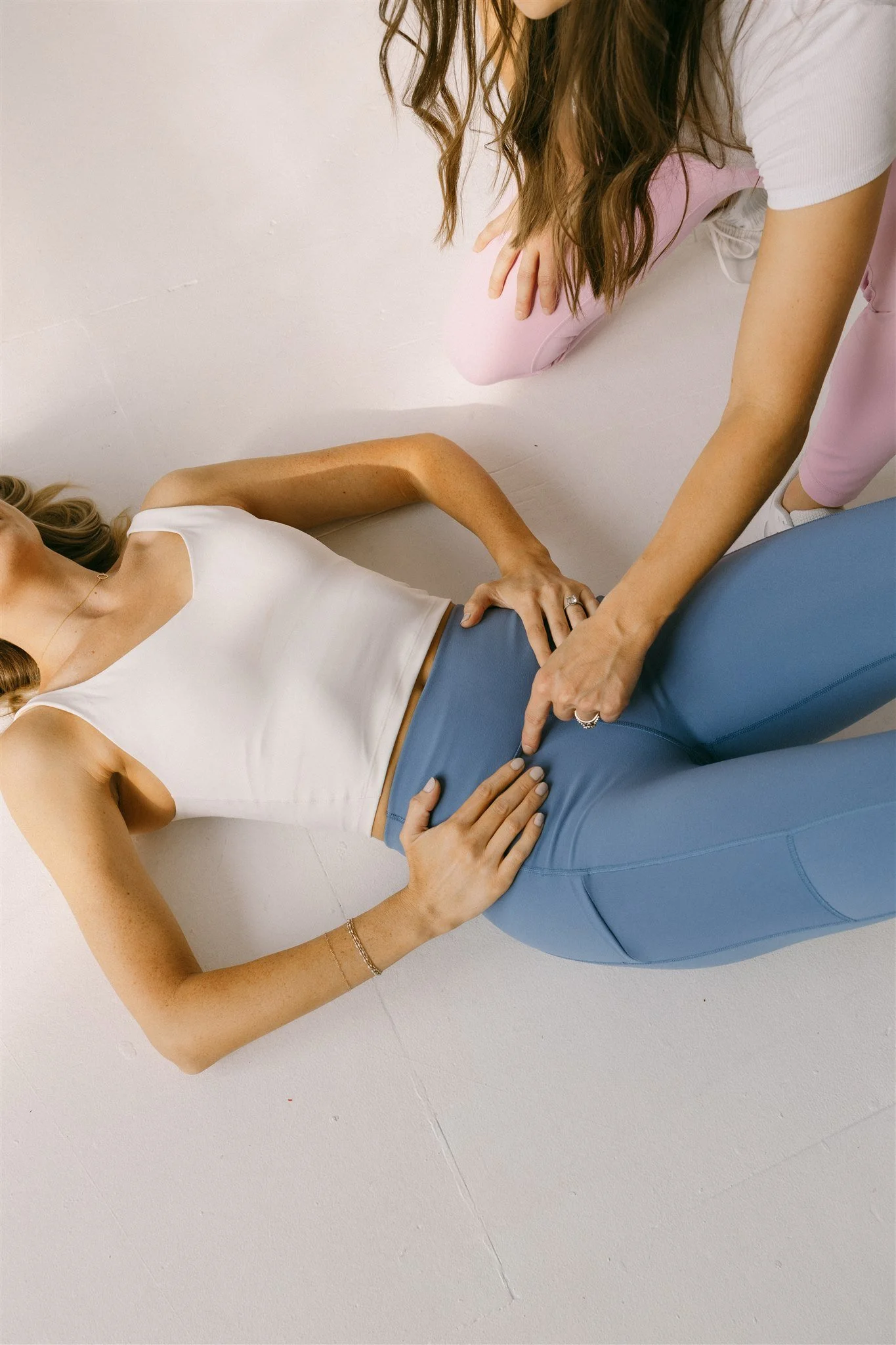
During a Cesarean birth, your medical team works through seven layers of tissue to reach your baby: skin, subcutaneous tissue, fascia, rectus abdominal muscles, peritoneum, uterus and the amniotic sac. Not every layer is completely cut. Some tissues, including the abdominal muscles, are typically separated or gently spread apart rather than cut through. But regardless of how each layer is accessed, that's a LOT of tissue involved in surgery and a lot of healing that needs to happen afterward!
And remember, healing isn't just happening at the incision you can see on your skin. Your body is also recovering internally. As these tissues heal, your body produces scar tissue to help repair and protect the affected areas. This is a completely normal and necessary part of recovery! However, scar tissue can sometimes become stiff, sensitive or less mobile than the surrounding tissues. Internal adhesions can also form when bands of scar tissue connect tissues or structures that would normally move independently.
So how does this affect your pelvic floor?
Your abdominal wall and pelvic floor don't function separately. They're part of a coordinated system that also includes your diaphragm and surrounding muscles. If your C-section scar is painful, sensitive or restricted, it may affect how comfortably your abdominal wall moves, how you manage pressure through your core and how your pelvic floor responds during movement.
And the effects aren't limited to your pelvic floor! Scar-related restrictions or sensitivity may contribute to pulling sensations, discomfort with stretching or twisting, changes in abdominal wall mobility or difficulty returning to certain exercises. Some women also experience numbness or heightened sensitivity around their incision.
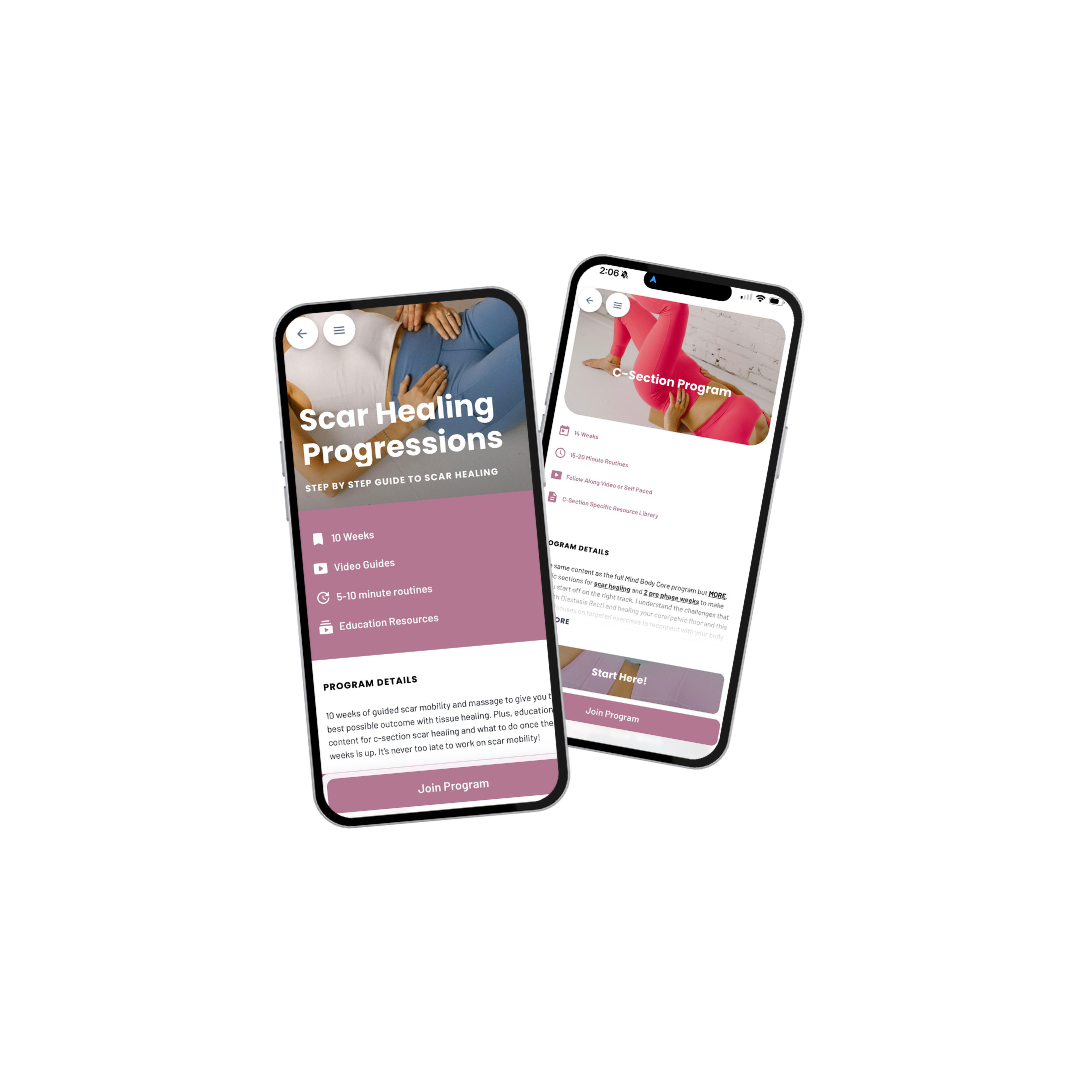
This is why I put so much emphasis on C-section scar recovery inside my Postpartum Program. We don't want to rush the healing process, but we also don't want to completely overlook the scar once the skin has closed.
In the first couple of weeks, that might mean simply getting comfortable with your incision by gently touching over clothing or practicing relaxed breathing with your hands resting near the area. Once your incision has healed and you've been cleared by your medical provider, you can gradually begin scar desensitization and mobility work.
Inside MBC, we progress that scar work step by step, but there's never a race to move forward. If you need more time at a certain stage, that's completely okay! We’re not trying to force your scar to heal faster…we’re just trying to support comfortable movement, improve scar sensitivity and mobility where needed, and help your core and pelvic floor work together as you recover!
how post-c-section compensations can affect your pelvic floor
Our bodies are pretty incredible at protecting themselves. When something hurts or we've experienced an injury, we naturally adjust the way we move to avoid putting additional stress on that area...we naturally want to compensate! And after a major abdominal surgery like a C-section, those protective instincts can be STRONG.
Think about the first few days after a C-section. Standing up completely straight might feel like it's pulling on your incision, so you naturally hunch forward a little. You might curl inward when sitting, take shorter steps when walking or avoid certain movements that create tension across your lower abdomen. Your body is essentially trying to keep that area protected while it heals. It’s uncomfortable for the scar to be pulled in any way, so your body naturally tries to keep it “slack” in order to avoid discomfort.
And here's the thing…those adjustments aren't necessarily “bad”, especially in the early stages of recovery! You're healing from surgery, and finding comfortable ways to move is important. And I'm certainly not suggesting you should push through pain or force yourself into positions that don't feel right. The concern in regards to how our body wants to compensate is when those temporary protective strategies become habits that stick around long after they're needed.
For example, if you spend weeks avoiding an upright posture because it initially felt uncomfortable, you may continue moving that way even as your incision heals and your tolerance for movement improves. Over time, consistently avoiding certain positions or movements can contribute to stiffness, reduced mobility and changes in how your muscles coordinate. It's not that your scar permanently heals into a hunched position, but your body can become accustomed to moving within a smaller, more protected range.
And these compensations aren't limited to posture! You might find yourself holding your breath when lifting, constantly bracing your abdominal muscles or gripping through your pelvic floor in an effort to feel more stable. Because your breathing, core and pelvic floor work together, those patterns can sometimes contribute to excess muscle tension or difficulty coordinating those muscles during everyday activities.
This is another reason guided C-section recovery is so valuable. We want to respect your body's need for protection early on while gradually helping you feel comfortable moving, breathing and using your muscles more naturally again when the time is right. Recovery isn't about avoiding every uncomfortable sensation, but it also isn't about pushing through pain. It's about finding that balance between allowing your body to heal and gradually restoring the movement and function you need for everyday life.
so…what should pelvic floor rehab after a c-section include?
We've covered quite a few reasons why your pelvic floor deserves attention after a C-section, even if you never delivered vaginally, but now let's talk about what that recovery should actually look like!
First, C-section rehab should involve a LOT more than just strengthening your abdominal muscles or waiting for your incision to heal. We want to address the entire system, including your breathing, deep core, pelvic floor, scar mobility and how your body moves as you gradually return to everyday activities and exercise.
Here's what I recommend incorporating into a comprehensive C-section recovery plan:
Breathing + pressure management: Reestablishing comfortable, 360-degree breathing and learning how your diaphragm, deep core and pelvic floor coordinate as you move.
Deep core + pelvic floor reconnection: Practicing how to appropriately engage AND relax these muscles, rather than simply doing endless Kegels or abdominal exercises.
C-section scar recovery: Beginning with gentle scar awareness and desensitization, then progressing to scar mobility work once your incision has healed and you've been cleared by your medical provider.
Mobility + functional movement: Gradually restoring comfortable movement through your abdomen, hips, spine and surrounding tissues while working toward everyday activities like getting out of bed, lifting and carrying your baby.
Progressive strength training: Building on those foundations with increasingly challenging exercises that prepare your body for the demands of daily life, workouts and higher-level activity when appropriate.
And just as importantly, your recovery should progress WITH you. What makes sense during your first few days postpartum will look very different from what you're ready for at six weeks, three months or a year postpartum.
And if you do end up experiencing symptoms of pelvic floor dysfunction after your C-section, such as:
Urinary leaking or difficulty controlling your bladder
Pelvic pain, pressure or heaviness
Pain with intimacy
Difficulty fully relaxing or coordinating your pelvic floor muscles
Bowel-related symptoms, like constipation or difficulty emptying
Know that there are resources available to help you address these concerns, too! Inside Mind Body Core, we have additional programs and resources dedicated to specific pelvic floor dysfunctions that you can incorporate alongside your postpartum recovery program as needed.
And if your symptoms persist, worsen or require more individualized attention, working with a pelvic floor physical therapist can be another valuable part of your recovery. The most important thing for you to know is that you don't have to ignore these symptoms or assume they're just something you have to live with because you've had a baby. While some things are common, they are not normal, and having them addressed is something I always encourage!
your c-section recovery plan is already waiting inside mind body core!
The fact that SO many women leave the hospital after a C-section with very little guidance on how to actually support their recovery is something I'm actively working to change.
You've just given birth AND undergone major abdominal surgery. You deserve more than being sent home to figure out the recovery process on your own! And “resting” (whatever that means) for 6 weeks until your check-up, and then being told to return to regular activity (again…whatever that means?) at said check-up, just ain’t it!
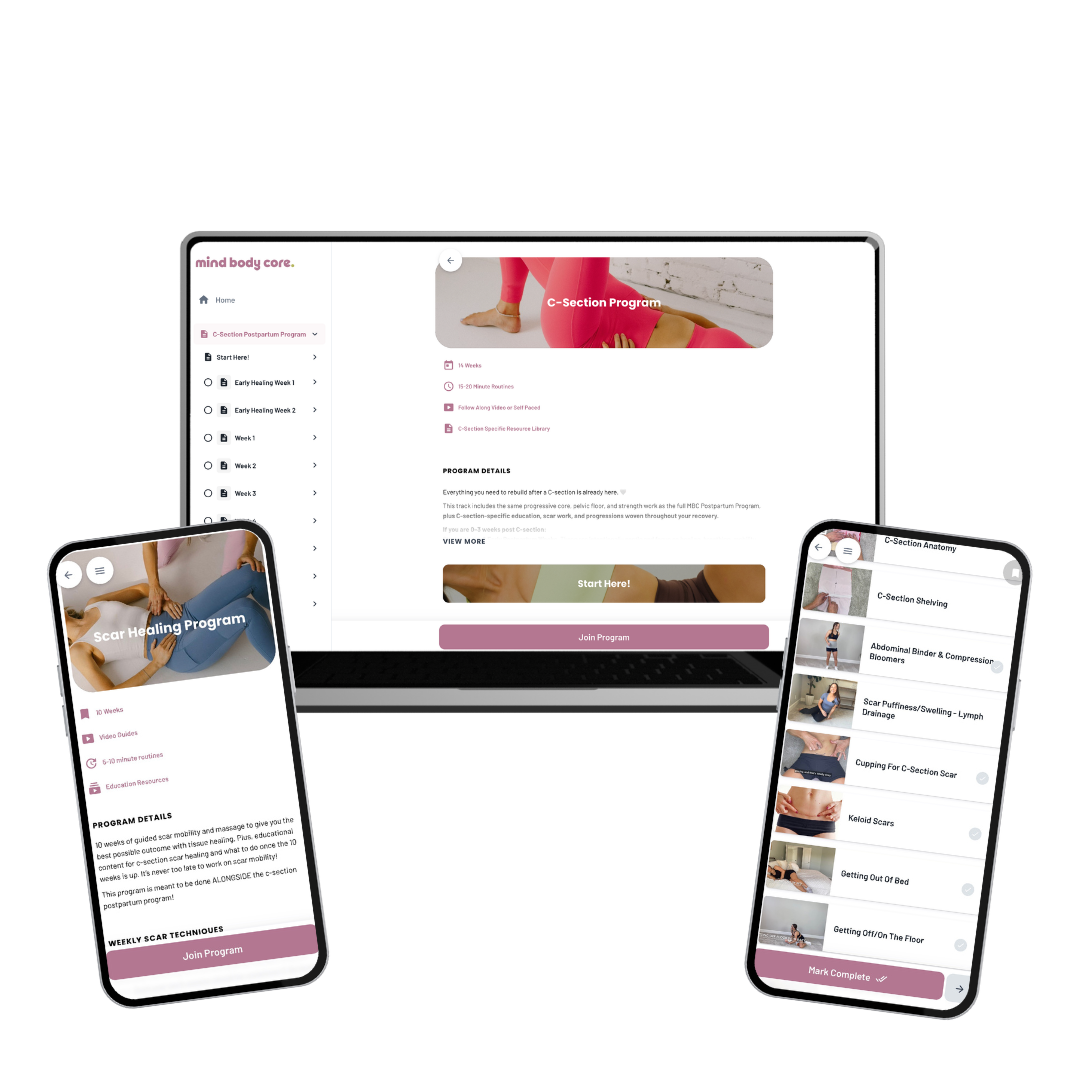
That's exactly why I created the C-Section Postpartum Program inside Mind Body Core.
This is a comprehensive 14-week postpartum recovery program, with two additional weeks dedicated to early C-section recovery compared to the non-C-section Postpartum Program. And alongside that, you'll have access to the 10-week C-Section Scar Healing Program, plus additional educational resources to help you understand your body and navigate recovery.
And when I say this program is designed to meet you where you are, I mean it!
You can start on DAY ONE postpartum where the early weeks are designed to help you understand how to move safely and comfortably after surgery, how to get in and out of bed, how to protect your healing incision and what you can begin doing to support your recovery. From there, the program gradually progresses through deep core and pelvic floor reconnection, mobility, scar recovery and strength training as your body is ready.
And while I LOVE the idea of a newly postpartum mom having immediate access to the C-Section Postpartum Program, I also know that it doesn’t ALWAYS happen that way, and if that’s the case for you, this program is STILL for you!
If you had your C-section six months ago, two years ago or even longer, and never had the opportunity to work through a structured recovery program, you can absolutely start now! Your starting point and individual needs may look different, but there is still value in addressing your core and pelvic floor coordination, scar-related concerns, mobility and strength.
Inside MBC, I've already put the programming, exercise demonstrations, voiceover cueing and educational resources together for you. You don't have to piece together random exercises, wonder what comes next or try to figure out how to progress on your own.
Whether you're preparing for an upcoming C-section, recovering from one right now or finally making time to address a recovery you never fully worked through, we're here to help you take that next step.