

the blog

How to Properly Babywear
Babywearing can be such a lifesaver during those first few months when you’re feeling ready to do more physically, but want (or need) to keep baby close to you. There are so many different products and styles out there for babywearing, but this blog is going to focus on two types in particular - a more structured fit and a looser fit. This blog post will dive into how to properly fit and wear these two different types of carriers as well as things to be aware of when it comes to your posture, body mechanics and some tips and tricks for alleviating discomfort that may pop up after an extended amount of babywearing.
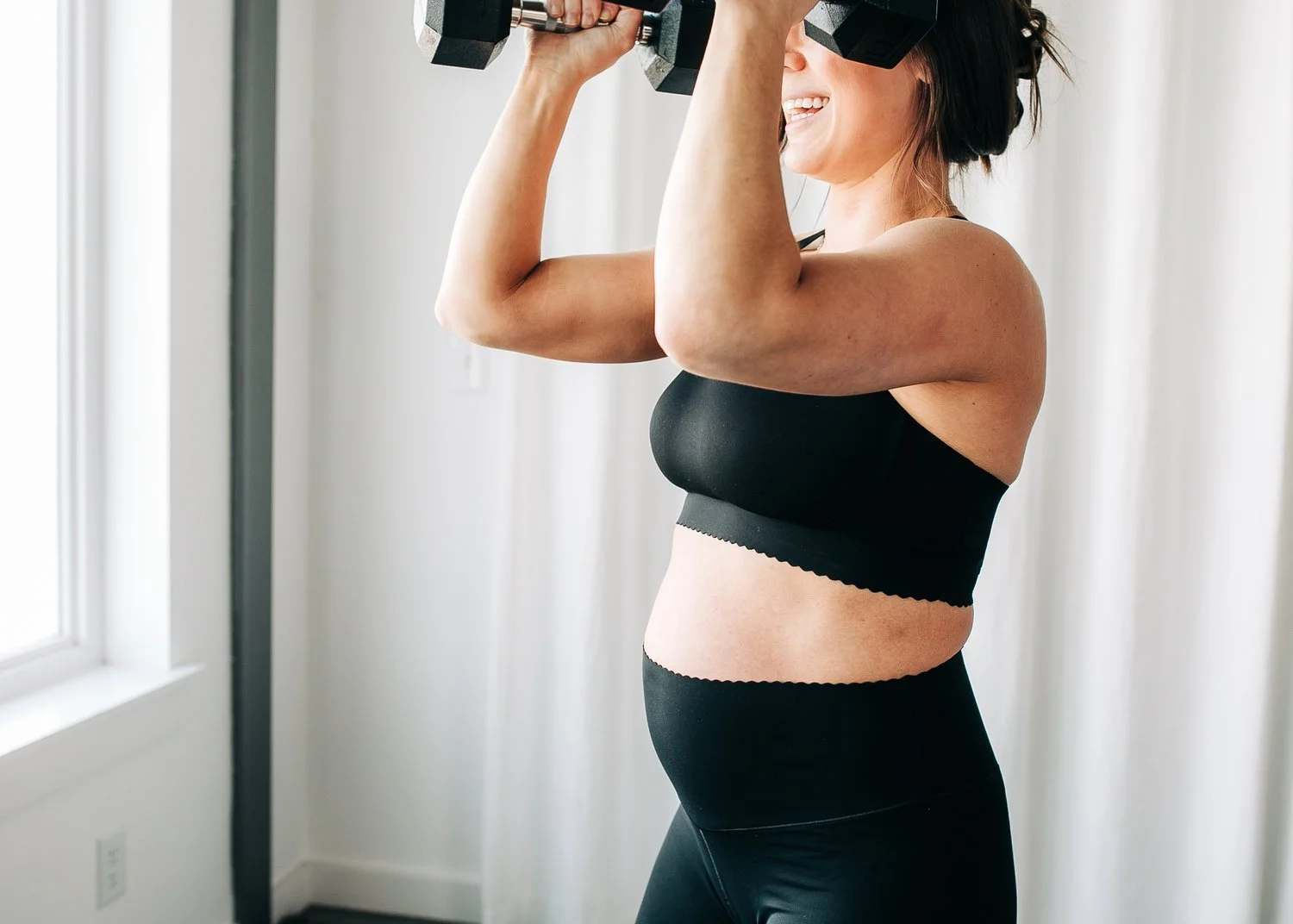
What You Can Do During Pregnancy to Make Your Birth + Postpartum Experience Easier
If making your pregnancy, labor, birth AND postpartum (early and later) experience easier on yourself is a priority for you, then strength training should absolutely be part of your game plan! In this blog post, I will cover all the various ways that strength training during pregnancy can help make your life easier down the road.

Perineal Tear Prevention
Perineal tearing is one of those things we all hear horror stories about, right? But instead of stressing about if it will or won’t happen to you, let’s focus instead on what we CAN control. This blog post is going to do exactly that. If you’re looking for specific things to focus on and ways to help prevent the risk of perineal tearing during childbirth, this blog post is for you. This blog is going to be research-backed and explain what the evidence suggests as far as effectiveness for various tips and techniques to help reduce your risk for perineal tearing.

C-Section Care for Optimal Recovery: What to do for your scar early on or even months and years later
Whether your C-Section was planned or unplanned, sometimes knowing how to care for yourself and your scar afterwards can feel like a huge question mark. In this blog post, I am going to cover major priorities early post-C-Section recovery as well as what to work on in those first 6 weeks after having your baby. I also will go over what you can do for your scar if you are NOT in the early stages of recovery anymore and are noticing some issues with your scar recovery and healing. Even if you are months or years down the road, it’s NEVER too late to start doing some scar work.

Where to Start with Early Postpartum Recovery
If you’re wondering what you should be doing to help your body heal and recover in those early days postpartum, you’re in the right place! Maybe you’re currently pregnant and are already thinking ahead for how to prep and plan, or maybe you’re currently postpartum and are looking for a reputable resource to turn to for help, either way, I’m going to cover what you should be prioritizing when you are early postpartum and go over a few simple activities and movements to help you recover from labor and birth.

How to Push Your Baby Out
This blog post is going to get RIGHT to the good stuff! If you’ve been wondering HOW you’re supposed to push your baby out, then this blog is for you. You may have heard the common cue before, “push like you’re pooping”, which is great, but only if you know how to push while pooping! I’m going to go through exactly what this means, how to practice it and also provide you with a FREE resource to help you prep for when the time comes!

Breathing During Labor: How to Work With Your Body
Learning HOW to breathe during labor can be an extremely valuable tool to utilize both when riding the waves of contractions and when ready to push. There are several different techniques and ways to utilize the breath through labor and birth, but this blog post is going to focus on two specific breathing techniques in particular to allow the body to relax through contractions and have productive pushes.

How to Improve Sleep and Alleviate Discomfort While Pregnant
If you’re anything like me, then you understand how important sleep is and how frustrating it can be to struggle with getting good rest, especially when pregnant. If you find yourself waking up in the morning (or middle of the night) with those irritating pregnancy aches and pains that just seem to get worse AFTER sleeping or you find yourself waking up for what feels like absolutely no reason at all, then you’re in the right place! In this blog post, I’m going to discuss the ideal sleeping position(s), how to utilize pregnancy pillows, and some helpful tips for pregnancy insomnia. Sometimes just a few tweaks and positional adjustments is all it takes to turn a night of tossing and turning into a more restful night of sleep!

7 Things I’m Doing as a Pelvic Floor Physical Therapist in my Third Trimester
With my background in pelvic health and experience working with pregnant and postpartum women, along with being currently pregnant with my second child, I wanted to share with you ALL the things I’m choosing to do and focus on during my third trimester. Keep in mind, pregnancy choices are very individual and may need to be discussed with your healthcare provider first, but if you’re interested in what my third trimester looks like, read through for not just the physical side of it, but the mental, emotional, spiritual and everything in between…this blog post covers it all!

Sciatica and Low Back Pain in Pregnancy
If you’ve ever felt that zinger going down the back of your leg or experienced that “nervy ache” during pregnancy, then it’s likely that you’re familiar with sciatica! While you may have experienced the symptoms, you may be wondering what exactly it even is and why it happens - especially during pregnancy. In this blog post, I will address what sciatica is, what symptoms to be on the lookout for, why it can be more symptomatic during pregnancy and some tips and tricks for combatting that irritating (and sometimes debilitating) nerve pain. Make sure to read ALL the way to the bottom for a some postpartum relief hope and tools to combat if it does continue on past pregnancy.

The Deep Core: Why it Matters During Pregnancy
The deep core is an important grouping of muscles for anyone’s foundational strength, but it is especially important for someone going through pregnancy. There are many reasons for this, including supporting the increased weight of the baby itself, stabilizing and improving balance and function throughout the pregnancy, tolerating the demands of the labor and birth experience and reducing the amount of stress and strain to other areas of the body that may be affected by the pregnancy. In this blog post we are going to discuss the anatomy of the deep core, how it and other surrounding muscles are impacted by pregnancy, and the importance of maintaining deep core strength throughout the pregnancy. Make sure to read all the way through for my TOP 3 deep core pregnancy exercises as well as the importance of making modifications throughout your pregnancy and some key compensations to be aware of while working on strengthening the deep core.

Pelvic Organ Prolapse: Can it be fixed without surgery?
Prolapse. The word alone sounds scary, doesn’t it? But it doesn’t have to BE scary for you if you are someone who is currently experiencing symptoms or has been diagnosed with any sort of pelvic organ prolapse. You may be trying to find some answers, figure out what the next steps are or what to expect as you navigate through this. This blog post is here to educate you on what a pelvic organ prolapse is and the different types, what factors may cause a prolapse and the hot topic of whether surgery is necessary or not. Aside from that (and also more importantly), this blog post is meant to empower you and help to reduce the fear, panic and anxiety you may be experiencing if you are currently going through this! If you are simply looking for methods of prevention or wanting to learn how to keep a pelvic organ prolapse from worsening, make sure to read all the way to the bottom for my top 10 tips!

Abdominal Binders And Compression After Birth: Do We Need Them?
Abdominal binders and compression garments after having a baby can be a nice option, especially if you are needing extra support for pain control or just overall comfort. Many women, especially after having a C-section, are told to utilize an abdominal binder, but abdominal binders and/or compression garments can also be an option after a vaginal birth as well. In this blog post, I will discuss what an abdominal binder is, the different types of abdominal binders out there, what factors may indicate the need for using one, how to properly place and use one and the option for a compression bloomer as well! I also would like to briefly discuss the differences between a waist trainer and an abdominal binder, as this seems to be a common misunderstanding when comparing the two products. Let’s dive in!

Movement in the First Trimester: How to Combat Fatigue & Nausea
The first trimester can be a bit brutal when it comes to incorporating movement, or…well, EVERYTHING really! It is infamous for “morning sickness”, which, let’s be real, is often an “all-day-sickness”. And if that doesn’t get you, then the insurmountable fatigue that often comes along with that first trimester likely will. We know that movement is important throughout pregnancy, for both mom AND baby, but how do we incorporate movement into our daily routine when our energy tank is at an all-time low and we may hurl at any moment?? Really not a good combination, but…that’s exactly what I plan to help you with in this blog post! This blog post is going to focus on tips and tricks to help you combat fatigue and nausea that can rear their ugly heads during that first trimester of pregnancy as well as understand the WHY behind all of these unpleasant symptoms.

Strengthening the Pelvic Floor: Exercises Better Than Kegels
If you have ever struggled with any sort of pelvic floor issue and all you were told is to, “Just do Kegels!”, then this blog post is for you! In the past, knowledge and awareness of pelvic floor treatment options were fairly limited - both in the general public and in the professional community. Even today, this is still an area that lacks in full awareness, which is why the standard treatment for pelvic floor conditions became the one and only thing people DID know about - the Kegel. Unfortunately, ‘just doing Kegels’ is NOT always the right thing to do and almost always should not be done initially or in isolation. In this blog post, we are going to uncover why pelvic floor strength is important, what a Kegel is and when they may be appropriate to perform, potential risks of doing too many Kegels, and some alternative options for strengthening the pelvic floor that may actually be BETTER than Kegels!

Exercise & Pregnancy: Is it Safe?
Exercising during pregnancy can be a confusing topic, and one that leads to MANY questions. Many women feel concerned about exercising during pregnancy due to the risk of injury, not just of themselves, but of their baby as well! This can be a legit fear for some soon to be mama’s, but I’m here to help reduce the confusion and give you some research-based information to help point you in the right direction for exercising while pregnant! In this blog post, I am going to cover what the typical recommendation is, what the benefits to exercise is during pregnancy, what type of exercise you should be doing, things to look out for with modifying or stopping certain exercises while pregnant, and specific instances where you should NOT be exercising or ensure you have the permission from your physician first.

Three Tips to Prevent Tearing During Birth
I can’t even begin to explain the amount of women post-birth who have mentioned that it would’ve been nice to know and be a little more prepared for the things that could potentially happen during the birth experience. They felt that it would’ve reduced the amount of shock and just general feeling of being left in the dark about these things that they had never even known were potential, or even worse, likely to happen during the birth experience! I feel that it is part of my responsibility as a healthcare provider to educate and empower women, so this blog post is dedicated to do just that. Tearing is a very real possibility during the birth experience; however, in this blog post I’m going to share three tips that are research backed ways to help prevent tearing during birth.

Top 5 Postpartum Products: From a Pelvic Floor Physical Therapist’s Perspective
If you’re preparing to give birth any time in the near future, you’re going to want to save this blog post! As a pelvic floor physical therapist, I know some things about the postpartum time period, and let me tell you, all 5 of these postpartum products are one’s you are going to want to have with you. This blog post covers my TOP 5 favorite postpartum products (plus 2 BONUS C-section specific product recommendations), a few links, and a little information on what you’re going to need them for while in your postpartum initial recovery phase.

How to Heal a Diastasis Recti and Why Avoiding it Can Lead to Long-Term Issues
Diastasis Recti is the separation of the two sides of our rectus abdominis muscle (think 6-pack abs muscle) that often occurs with pregnancy - as baby grows, your body grows and stretches as well. The distance between the two sides (width) is known as the inter-rectus distance (IRD), and is how we measure if you have an actual DR or if you just have normal separation, as some separation is to be expected and a normal part of pregnancy.

The Deep Core: Why it Matters for Postpartum Healing
Does the term “deep core” have you a little stumped on what exactly that even means? Or maybe you have some idea on what it is referring to, but are struggling to find the significance between the deep core and postpartum healing. This blog post is going to go in-depth about the anatomy of the deep core, where it’s located, what exactly it does and why we need to know about all of this for optimal postpartum healing! Read all the way to the bottom for my two-cents on kegels and why they aren’t the “fix all” of the pelvic floor.