
High-Impact Exercise Postpartum: Benefits, Safety, and How to Start
Written by Dr. Lizzie Kieffer, DPT.
Let’s take a little trip down memory lane for a second and think back to how you moved as a kid. You probably ran, jumped, climbed, skipped, hopped, chased friends around, and changed direction without giving any of it much thought. Movement happened naturally, and a lot of it was probably high impact activities!
Even through the teenage years and early adulthood, women with a background in sports, fitness, or simply an active lifestyle may continue running, jumping, and moving explosively without ever stopping to classify those activities as “high impact”. They are just part of how the body moves and likely a part of your movement patterns in general.
But then pregnancy happens…and as pregnancy progresses, many higher-impact activities are naturally modified or paused, not only for safety reasons, but also comfort level! This is honestly expected, and can be completely appropriate for the season, especially as your body changes and your needs shift. But after birth, the hard truth is that many women NEVER return to those movements again.
Sometimes physical symptoms get in the way (leaking, pain, weakness etc). Sometimes energy and time are limited (hello, taking care of a whole new baby, right?), and there simply doesn’t seem to be a reason to jump, sprint, participate in extra-curricular sports or move quickly anymore.
But next thing you know, literal YEARS may pass without the body being asked to tolerate much impact at all…and that may not initially seem like a big deal. After all, you can still walk, strength train, and stay active without jumping. But our bodies adapt to the demands we regularly place on them, and to the demands we STOP placing on them.
We’ve all heard the saying: if you don’t use it, you lose it. But that begs the question → what are we even “losing” when higher-impact movement disappears from our lives?
Which is EXACTLY what we’re going to focus on in this blog! We’re going to look at what high-impact exercise can offer postpartum women, why gradually rebuilding that capacity matters, and how to reintroduce it in a way that supports your body rather than overwhelms it. Let’s get into it!
what counts as “high-impact” exercise?
Before we talk about why high-impact exercise matters, let's first define what it actually is so we can make sure we’re talking about the same thing. High-impact exercise refers to movements where both feet leave the ground, creating a greater amount of force that your body must absorb when you land. These activities place higher demands on your muscles, joints, tendons, bones, and pelvic floor compared to lower-impact forms of exercise like walking, cycling, or swimming.

Some common examples of high-impact exercise include:
Running
Jumping
Hopping
Skipping
Bounding
Jump rope
Plyometric exercises (such as jump squats or box jumps)
Sports or workouts that involve quick changes of direction (volleyball, softball, basketball etc.)
The key thing to understand is that "high impact" simply describes the amount of force moving through your body…and not a label that determines whether an exercise is good or bad.
Because these movements create greater forces, they also require your body to work harder. Your feet, ankles, knees, hips, deep core, pelvic floor, and tendons all have to absorb force, stabilize your body, and then generate force again for the next movement, and that's exactly why preparation matters.
Just as you wouldn't expect to lift your heaviest weight on your first day back in the gym, you also shouldn't expect your body to tolerate high-impact exercise without first rebuilding the strength, coordination, and control needed to handle those demands. But at the same time, that doesn’t mean we should avoid high-impact movement, but instead focus on gradually building your body's capacity so you can perform it confidently and safely when the time is right!
why high-impact exercise gets a bad rep postpartum
Let's make sure we’re really clear on something first…this is NOT a blog encouraging women to start jumping or running immediately after having a baby.
Pregnancy and birth place significant demands on your body. Your pelvic floor, deep core, connective tissues, muscles, and joints all need time to heal and recover. During those early postpartum weeks and even months, your focus should definitely be on rest, rebuilding your foundation, and gradually restoring strength, and absolutely NOT jumping into high-impact workouts. There is a reason postpartum rehabilitation starts with breathing, deep core connection, mobility, and progressive strength training. Those foundational pieces help prepare your body for the greater demands that come later.
The challenge is that, for many women, "later" never comes.
Some women never fully rebuild their foundation. Others do an excellent job reconnecting with their core and pelvic floor but stop there. Some return to strength training, yet never progress back into higher-impact activities like running, jumping, quick changes of direction or the specific sport they previously played recreationally.
Why? Everyone’s answer is likely different, but…
→ Sometimes it's because life gets busy and priorities shift.
→ Sometimes it's because those movements no longer feel necessary (or enjoyable?).
→ Sometimes it’s because the last time the activity was attempted, maybe an injury occurred causing fear of return again.
→ And sometimes it's because attempting them brings on symptoms like leaking urine, pelvic heaviness, pressure, or discomfort, making it feel like high-impact exercise simply isn't for them anymore.
If experiencing symptoms is a part of your experience with high-impact activity, then let me also provide a gentle reminder that having those symptoms doesn't automatically mean your body is incapable of high-impact exercise forever. More often, they're feedback that your body may need more preparation, a different progression, or additional support before it's ready for that level of demand.
Low-impact exercise is an incredible place to begin, especially during early postpartum recovery. Walking, mobility work, foundational strength training, and core rehabilitation all play an important role in helping your body heal. But if those are the only types of movement you ever return to, your body never has the opportunity to rebuild the capacity needed for higher-impact activities.
Just like we gradually increase the weight we lift over time, we can also gradually increase the amount of impact our bodies experience. The goal isn't to jump into advanced plyometrics overnight, but it is to progressively challenge your body so it continues adapting, growing stronger, and maintaining the abilities it was designed to have!
6 benefits of high-impact exercise for women
1. It Provides a Valuable Stimulus for Bone Health
One of the biggest long-term benefits of high-impact exercise is something you can't necessarily see or feel right away…your bones. Like muscles, bones respond to the demands placed on them. When they're exposed to mechanical loading, they adapt by becoming stronger over time. While resistance training is already one of the best things you can do for your skeletal health, adding appropriately dosed impact introduces a different type of stimulus that bones also respond to.
This becomes especially important during seasons of life when women naturally experience changes in bone health, including breastfeeding, perimenopause, and menopause. Supporting bone density early can help create a stronger foundation for the years ahead!
Recent research suggests that combining different forms of exercise (including resistance training, aerobic activity, and impact-based movement) may provide broader benefits for bone mineral density than relying on a single type of exercise alone. Rather than thinking of high-impact exercise as replacing strength training, it's better to think of it as another valuable piece of a well-rounded movement program…another tool in your tool belt, if you will!
2. It Helps Preserve Power, Not Just Strength
When we talk about fitness, we often focus on strength, which is obviously important, but strength and power are NOT the same thing.
→ Strength is your ability to produce force.
→ Power is your ability to produce force quickly.
Traditional strength training is excellent for building strength, but higher-impact movements like hopping, jumping, and bounding ask your muscles to generate force rapidly. That ability becomes incredibly valuable in everyday life.
A few examples…power helps you:
Catch yourself if you trip.
Quickly step over a toy left on the floor.
Climb stairs with confidence.
Change direction while playing with your kids.
Return to sports and recreational activities (if this is your jam).
As women age, power often declines before maximal strength does, making it an important quality to continue training throughout life…and not just for athletic performance, but for maintaining independence and confidence in everyday movement!
3. It Challenges Balance, Coordination, and Reaction Time
Every time you leave the ground and land again, your body performs an incredible amount of work behind the scenes. Within a fraction of a second, your brain and nervous system have to recognize where your body is in space, coordinate multiple joints at once, stabilize you during landing, and prepare you for the next movement. These repeated challenges help improve balance, coordination, proprioception (your body's awareness of where it is in space), and reaction time.
Research has consistently shown that exercise can improve lower-body strength, balance, mobility, and confidence with movement, all qualities that become increasingly important as we age and work to reduce our risk of falls (a HUGE risk for females especially). Training these skills now isn't just about today's workout. It's about maintaining the ability to move confidently for decades to come!
4. It Helps Build Tendon Capacity
When we think about getting stronger, we usually think about muscles, but let us not forget about our very important tendons too! Tendons connect muscles to bones, helping transfer force every time you run, jump, lift, or change direction. Just like muscles (and bones), tendons adapt to the demands placed upon them, but they need progressive loading to do so.
One thing to really be conscientious of when it comes to our tendons though…jumping into high-impact exercise before rebuilding your strength, coordination, and foundational movement can overload tissues that aren't yet prepared for those forces, increasing the risk of irritation or injury. This is why I always emphasize building your foundation first (those of you in Mind Body Core already know this!).
Once your body has developed the strength, control, and capacity to handle greater demands, gradually introducing higher-impact activities provides tendons with a new training stimulus that slower, controlled movements don't fully replicate. Over time, this can help improve how efficiently your body absorbs and transfers force during everyday movement and exercise.
5. It Improves Neuromuscular Coordination
What the heck does that mean (you might be wondering)? Having your muscles do the correct thing (or the thing you want them to do) isn’t just about the actual movement, it’s about the muscle coordination as well!
Every jump, hop, or quick change of direction requires your brain, nervous system, muscles, tendons, and joints to work together with incredible precision. Your body has to recruit the right muscles, at the right time, in the right sequence and typically all within milliseconds. The more you practice these movements, the more efficiently your nervous system learns to coordinate them.
The result isn't simply becoming "better at jumping", it's becoming better at organizing movement as a whole, allowing your body to react more smoothly, efficiently, and confidently during everyday activities and exercise alike.
6. It Maintains Athleticism and Real-Life Capacity
When people hear the word athleticism, they often picture competitive athletes, or maybe even women who played sports in high school or college, but athleticism isn't reserved for people playing sports. Athleticism is just all about your ability to move well! It's being able to run across a parking lot, hop over a puddle, sprint after your toddler, change direction quickly, or confidently participate in the activities you enjoy.
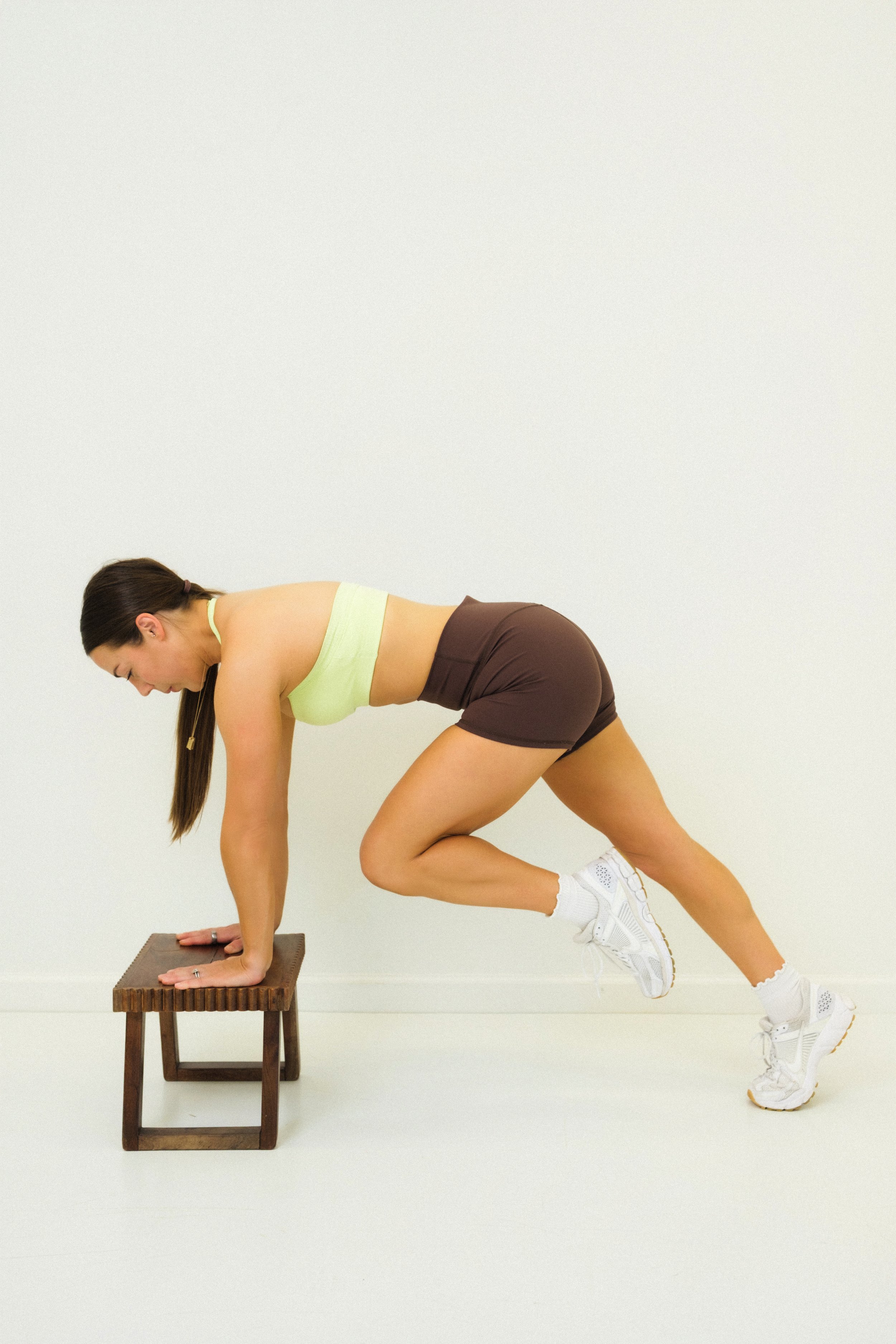
Many workout programs do an excellent job building strength, but rarely challenge speed, power, reactivity, or impact tolerance. Over time, if we never practice those skills, we naturally become less confident performing them. High-impact exercise isn't about becoming a better athlete, but instead, it's about maintaining the physical abilities that allow you to move through life with confidence, resilience, and freedom.
Do you ever think about how it’s crazy that we don’t really actively think about the very LAST time we are ever going to get to do a specific thing until it’s already long gone? An emotional example of this - you don’t really realize the last time your toddler calls you “mama” instead of “mom”, until you suddenly realized they haven’t been calling you mama for several months and you’re not sure they ever will again? I think about that same concept when it comes to higher impact activity. Have you ever thought about the last time you ran or jumped? Was that years ago? Was that the LAST time you would ever do that activity? What if we just continued to challenge ourselves and made incorporating high-impact activities a part of our regular routine? Heck, if we did that, we might be the generation that’s still jumping and running well into our elderly years! And I like that thought MUCH better than the alternative, don’t you?
when is YOUR body ready for high-impact exercise postpartum?
Okay, we’ve made it clear that this blog is NOT about rushing back into running, jumping or other high-impact activities immediately or even shortly after having baby, but now, let’s get into the weeds about when it IS the right time to start incorporating those specific types of activities into your routine.
As many of us know already, TIME is not the best predictor of readiness…for example, the 6-week check up seems to still be heavily relied upon as the appropriate time for a return to activity, but that doesn't necessarily mean their body has regained the strength, coordination, and capacity needed for higher-impact movement, or for some, even lower impact movement.
So, rather than time being the biggest variable, a better question might be → "Has my body rebuilt the foundation needed to tolerate impact?"
And when we ask that question, we want to look at a few specific things…
1. Pelvic Floor & Deep Core Coordination
Your pelvic floor and deep core should be able to work together with your breath to help manage pressure during movement. This doesn't mean they have to be perfect, but you should feel confident coordinating them through progressively challenging exercises before adding the demands of jumping or running.
2. Strength & Stability
High-impact movement places significant demands on the body, especially when you're balancing on one leg. That's why I like to see good single-leg control, strong hips and calves, solid balance, and the ability to maintain quality movement before introducing more impact.
These foundational qualities help your body absorb and produce force more efficiently while reducing unnecessary compensation elsewhere!
3. The Ability to Absorb Force
Impact isn't just about producing force, it's also about absorbing it. When you land from a jump or take a stride while running, your body needs to control that landing before moving into the next one. Gradually building your body's ability to absorb force is just as important as building strength.
4. Your Symptom Response
Perhaps the biggest indicator of readiness is how your body responds. If you notice symptoms such as:
Urinary or bowel leakage
Pelvic heaviness or pressure
Pelvic pain
Increased coning or doming through your abdomen
Low back or hip pain
Symptoms that appear later that day or even the following day
...those are signs that your current level of impact may be exceeding your body's present capacity. That doesn't mean high-impact exercise is off the table forever. More often, it's your body's way of communicating that it’s not quite ready for that level of activity…YET. Instead of calling it quits, a good solution is to temporarily reduce the demand, continue building your foundation, and then gradually progress again. Modifications are huge here!
If returning to running is one of your goals, I dive much deeper into this progression in my blog, How to Safely Return to Running Postpartum, where I walk through the specific assessments and milestones I recommend before lacing up your running shoes again.
how to reintroduce high-impact exercise safely
We've talked about why high-impact exercise matters and when your body may be ready to begin incorporating it again, now let's get to the meat and potatoes and talk about the how!
One of the biggest mistakes often made (for those who ARE trying to return to high-impact exercise after baby) is jumping from foundational rehab straight back into running, jumping, or HIIT classes without gradually rebuilding the capacity to handle those demands. Instead of thinking about returning to impact as a single milestone, think of it as a progression. Each phase builds upon the one before it, preparing your body for the next level of challenge.
Step 1: Build Your Foundation
Every successful return to high-impact movement starts here. Before adding impact, your body should have a solid foundation of:
Coordinated breathing and pressure management
Deep core and pelvic floor connection
Foundational strength
Good mobility and movement quality
These pieces are what allow your body to create and absorb force efficiently. Skipping this phase often leads to compensations, symptoms, or frustration later on.

Step 2: Develop Single-Leg Strength and Control
Walking, running, hopping, and jumping all require your body to spend time balancing on one leg. Before introducing impact, spend time building stability and strength through movements such as:
Split squats
Step-ups
Single-leg balance exercises
Calf raises
Lateral movement patterns
These exercises improve the control and strength your body needs before progressing to more dynamic activities!
Step 3: Introduce Low-Level Impact
Once your foundation is solid, you can begin exposing your body to small amounts of impact in a controlled way. That might include:
Faster-tempo heel raises
Marching drills
Small hops
Gentle pogo jumps
Landing mechanics and controlled deceleration practice
The goal isn't to see how much impact you can tolerate. It's to gradually teach your body how to create and absorb force again with good mechanics.
Step 4: Progress One Variable at a Time
As your body adapts, continue increasing the challenge, but do it gradually. Rather than changing everything at once, focus on progressing one variable at a time, such as:
Repetitions
Jump height
Speed
Direction
Duration
External load
Giving your body time to adapt between progressions helps build resilience while reducing the likelihood of overload.
Step 5: Listen to Your Body's Response
Perhaps the most important step is paying attention to what your body tells you after your workout. And you can listen to this by doing a quick check in with yourself:
During the session
Immediately afterward
Later that day
Over the next 24 - 48 hours
If you notice increased leakage, pelvic heaviness, pain, coning or doming, or symptoms that linger into the following day, it doesn't necessarily mean you've failed or that high-impact exercise isn't for you. It simply is feedback from your body that means the current level may have exceeded your body's CURRENT capacity.
The answer is rarely to stop moving altogether. More often, it's to temporarily reduce the challenge, continue strengthening your foundation, and then build back up with a slower progression. Remember, rebuilding your body's ability to tolerate impact is a process, not a race!
high-impact exercise is just one piece of the puzzle
By now, you can probably see that this blog isn't really about jumping or running or whatever your high-impact activity of choice is. This is about building a body that's capable of handling jumping, and every other movement you want to do throughout life!
High-impact exercise is just one piece of a complete fitness program. It should complement (not replace) foundational strength training, mobility, deep core and pelvic floor work, aerobic conditioning, and adequate recovery. High impact activities don’t even need to be incorporated into EVERY workout (and they probably shouldn’t be), but we do want to maintain the capacity to do high-impact activities when you want or need to!
Which is EXACTLY the philosophy behind Mind Body Core!
Inside MBC’s Postpartum program, high-impact movements aren't randomly added into workouts or introduced before you're ready. Every program is designed to progressively build your body from the ground up, starting with breathing, core connection, mobility, and foundational strength before gradually exposing you to higher-level movement when it's appropriate.
And if you’re beyond the Postpartum program, high impact activity is also incorporated into MBC’s Weekly Workouts! This is intentional and purposeful, because as they say, if you don’t use it, you lose it - and we aren’t losing ANYTHING over here!
So, whether you're working through postpartum rehab, rebuilding your strength, or preparing to return to running and other higher-impact activities, each phase is intentionally designed to build on the one before it. Modifications are always available, voiceover coaching (or the follow-along option to do it with me!) walks you through your breathing and pressure management, and your workouts evolve as your body becomes stronger and more capable.
Because we aren’t just working on a return to exercise, we have far bigger goals that include building a body that’s prepared to move confidently today, tomorrow, next year and even decades from now!
continue building your strength inside mind body core
If you're looking for a program that wasn’t just designed for recovery and rehab after baby, but to take you full circle, well, this is a huge part of why I created Mind Body Core!
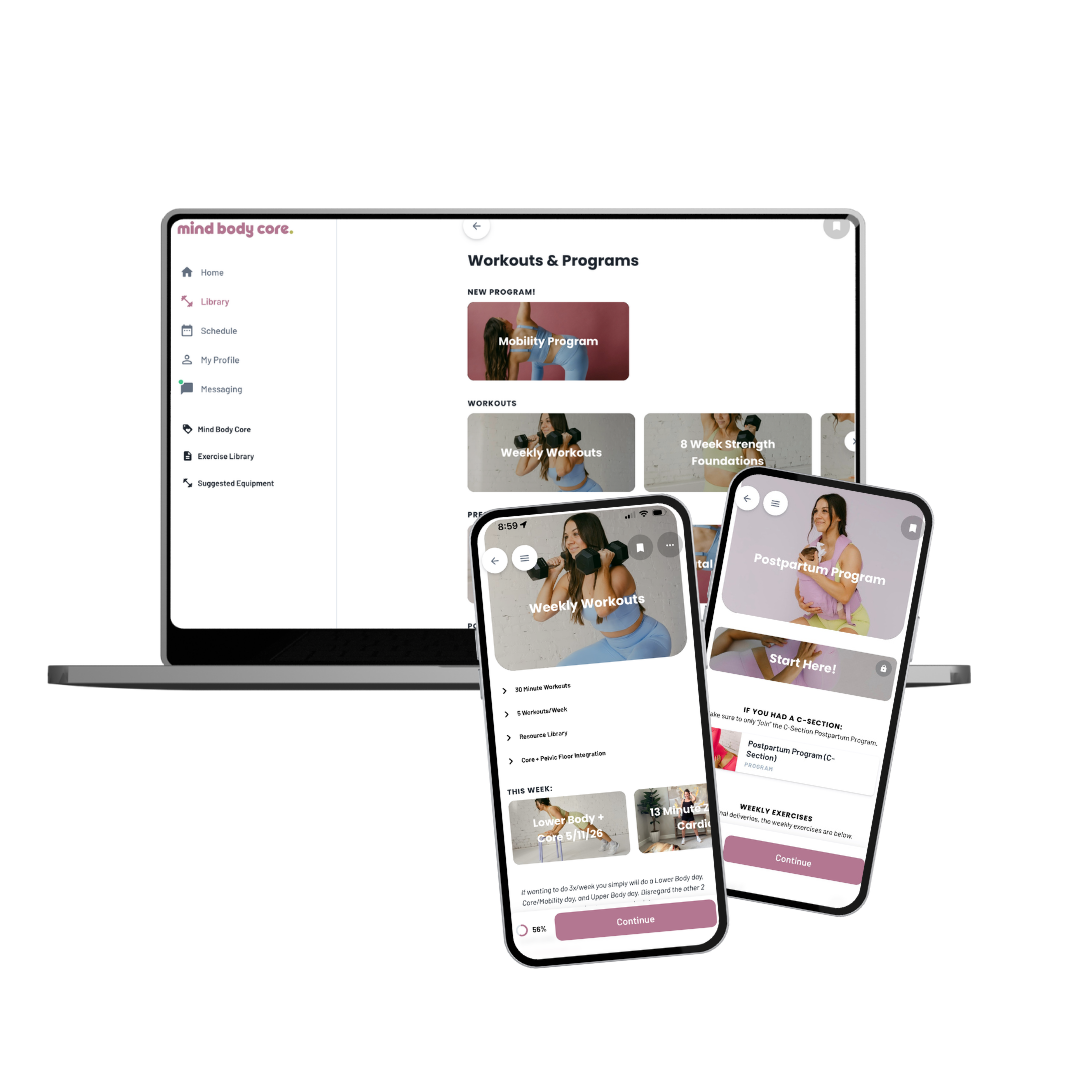
Inside the Postpartum Program, you'll start exactly where your body needs to begin→ with breathing, deep core and pelvic floor coordination, mobility, and progressive strength training. As you move through the program, you'll continue building strength, confidence, and capacity so you're prepared for the next phase of recovery instead of wondering when (or if) you're ready to move forward.
But healing is only the beginning!
Once you've completed your postpartum rehab, you can seamlessly transition into the Weekly Workouts, where you'll continue building strength while gradually incorporating more dynamic movement…including higher-impact exercises when they're appropriate for your body. Rather than avoiding these movements forever, you'll learn how to perform them with proper breathing, pressure management, and form, all while continuing to progress your strength.
And because every woman is different, modifications are always available. Whether you're rebuilding after your first baby, returning to running, or simply working toward feeling stronger in everyday life, you'll have the flexibility to choose the option that best matches your current abilities while still making forward progress.
Mind Body Core was designed to support you beyond those first postpartum weeks. It's a complete system that grows with you…from rebuilding your foundation to lifting heavier, moving faster, and confidently returning to the activities you love.
Your body was made to adapt. Give it the opportunity to keep doing exactly that! Join Mind Body Core today and start building strength that supports you through postpartum, motherhood, and every stage that follows.
*Research: Duchette C, Perera M, Arnett S, White E, Belcher E, Tinius R. Benefits of Resistance Training During Pregnancy for Maternal and Fetal Health: A Brief Overview. International Journal of Women's Health. 2024;16:1027-1038. doi:10.2147/IJWH.S462591. PMID: 38912201.
Li X, Zhu J, Xu L, Zhang H, Fu X, Wang Y. Effect of Different Types of Exercise on Bone Mineral Density in Postmenopausal Women: A Systematic Review and Network Meta-Analysis. Scientific Reports. 2025;15:11740. doi:10.1038/s41598-025-94510-3.
Hsu HH, Chiu CY, Chen WC, Yang YR, Wang RY. Effects of Exercise on Bone Density and Physical Performance in Postmenopausal Women: A Systematic Review and Meta-analysis. PM&R. 2024. doi:10.1002/pmrj.13206. PMID: 39032163.